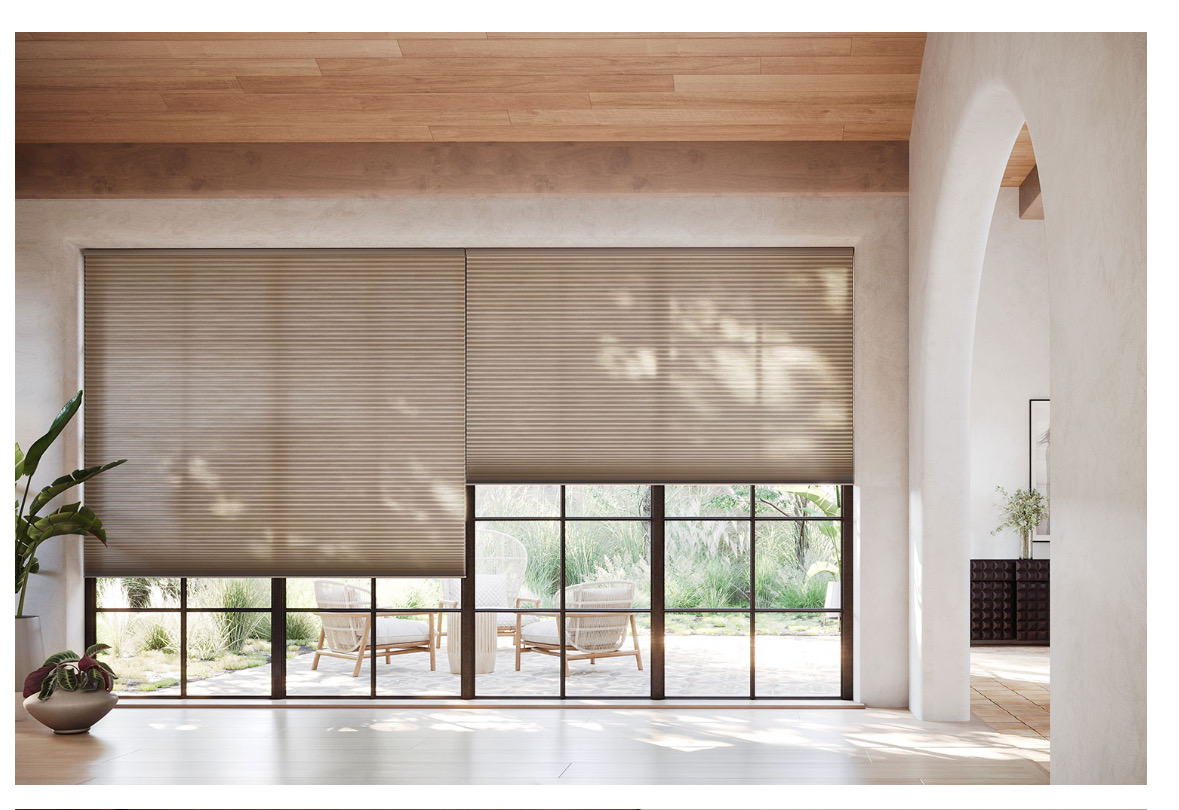
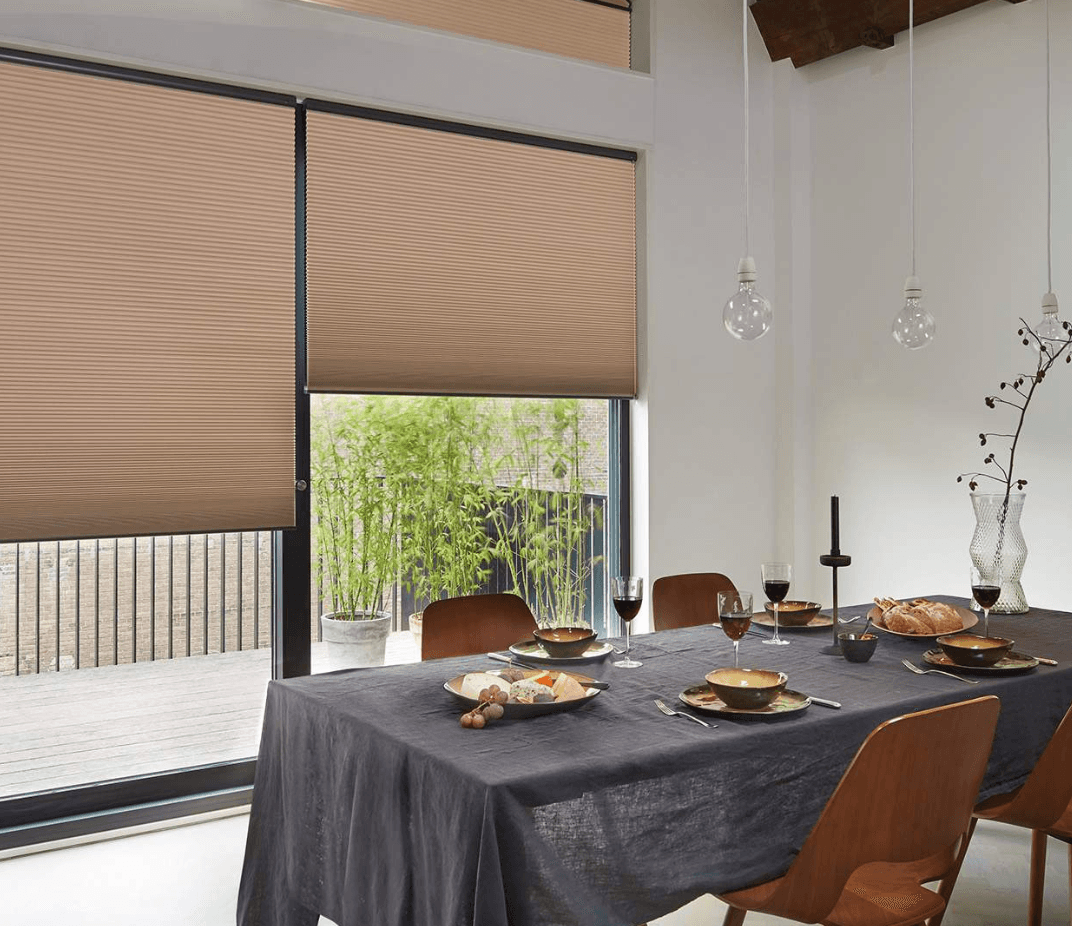
Every blind type has a job it does well. Honeycomb’s advantage is insulation, no other blind creates the thermal barrier that cellular fabric does. Here is how it compares to the alternatives:
Honeycomb vs roller blinds: Roller blinds block light effectively and cost less, but they sit flat against the window with no air gap. No insulation, no noise reduction. If temperature control matters, honeycomb wins. If you just need light control on a budget, roller is fine.
Honeycomb vs venetian blinds: Venetian blinds give more precise angle control over incoming light, you can direct sunlight exactly where you want it. But they collect dust, make noise in a breeze, and provide minimal insulation. Honeycomb is softer, quieter, and far better at managing temperature.
Honeycomb vs curtains: Honeycomb sits flush inside the window recess, taking zero floor space. It looks cleaner and provides better insulation than most curtain fabrics. Curtains work well layered over honeycomb for a decorative effect, but on their own they cannot match cellular insulation performance.
Honeycomb vs zebra blinds: Zebra (duo roller) blinds give you adjustable sheer-to-opaque control with a contemporary look. They are excellent for light management but offer minimal insulation. Choose zebra for style and light play, honeycomb for thermal performance.
For rooms where moisture resistance matters more than insulation, plaswood venetians, aluwood venetians, or aluminium venetians handle humidity and salt air without concern. Wooden venetians suit dry living areas where natural grain is part of the design. All blind types are available with no-drill mounting for renters and aluminium frames. For a complete overview, see our blinds in South Africa guide.