
Which Blinds, Shutters and Awnings Work in South Africa’s Climate?
South Africa’s climate ranges from humid subtropical coasts to dry highveld winters and blistering Karoo summers. A blind that performs perfectly in Johannesburg may fail on the Garden Route within two years. The material must match the conditions.
Which window products handle South African weather conditions?
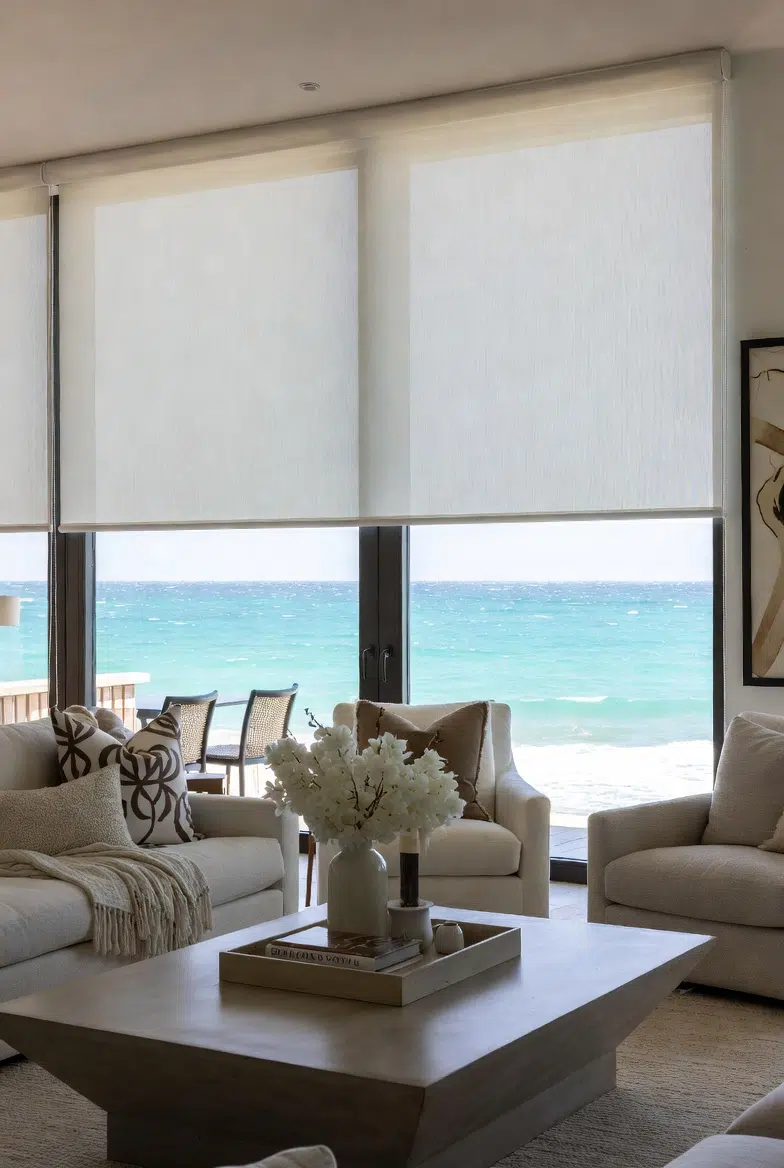
- Coastal humid areas (Garden Route, KZN, Cape coasts): aluminium venetians, PVC shutters, UV-stabilised roller fabrics, powder-coated aluminium outdoor blinds. Avoid timber and untreated steel.
- Highveld (Johannesburg, Pretoria): most materials perform well. UV protection is the priority. Honeycomb blinds provide excellent insulation for cold winter mornings and hot summer afternoons.
- Hot dry inland (Karoo, Limpopo): heat management is critical. Outdoor awnings and sheerweave blinds reduce solar heat gain before it reaches the glass. Blockout roller blinds inside complete the barrier.
- Cape winter rainfall: moisture-resistant materials essential. Mould-resistant sheer fabrics and PVC shutters outperform timber in wet winter months.
- All regions: UV-stabilised fabrics from tested manufacturers last 8 to 12 years. Generic imports degrade in 2 to 3 South African summers.
Shop climate-rated blinds | Garden Route: Call Duncan on 079 523 5407
South Africa does not have one climate. It has six. The blind that works in Cape Town winter will not survive a Durban summer. The awning that handles Joburg storms may fail in a Garden Route berg wind. Start with your conditions, not the catalogue.
Coastal and humid regions
The Garden Route, KwaZulu-Natal coast, and parts of the Western Cape experience salt air, high humidity, and intense UV year round. These conditions are the harshest test for any window covering.
What works: Aluminium venetian blinds resist corrosion and handle moisture without warping. PVC shutters perform identically to timber aesthetically but never swell or mould. UV-stabilised roller blind fabrics from Hunter Douglas and Coulisse maintain colour and structure for years. Powder-coated aluminium outdoor blinds and security shutters resist salt spray without repainting.
What fails: Timber venetians and shutters warp in sustained humidity. Steel hardware corrodes within 2 to 3 years without marine-grade galvanising. Cheap imported roller fabrics fade and become brittle within two summers. Untreated outdoor blind brackets seize as salt deposits build up inside the mechanism.
Highveld: Johannesburg, Pretoria, and surrounding areas
The highveld has a dry winter, a wet summer, and year-round UV intensity. Most blind materials perform well in these conditions because humidity is lower than the coast and salt exposure is zero.
The priority is UV protection and temperature management. North-facing windows in Johannesburg homes receive sustained direct sun for most of the day in winter when the sun sits lower. Honeycomb blinds provide the best insulation against both summer heat and winter cold mornings, reducing the energy needed for heating and cooling.
Screen roller blinds reduce glare and UV while preserving views across Johannesburg’s skyline and garden suburbs. For apartments and townhouses with limited outdoor space, no-drill blinds install without any wall damage.
Hot dry inland: Karoo, Limpopo, Free State
Extreme daytime heat and strong UV are the dominant challenges. Air conditioning costs are significant. The most effective strategy intercepts solar heat before it enters the building.
Retractable awnings and outdoor blinds shade windows from the outside, which is more effective than any indoor treatment. Inside, blockout roller blinds prevent residual heat and light from entering. The combination of external shade plus internal blockout can reduce room temperature by several degrees without air conditioning.
Humidity is low, so timber products perform well inland. Wood venetians and timber shutters that would struggle on the coast can last decades in dry inland conditions with minimal maintenance.
Cape winter rainfall region
Cape Town and surrounds experience wet, cold winters with persistent moisture from June to September. Mould is the primary enemy. Blinds in bathrooms, poorly ventilated bedrooms, and rooms with single-pane windows are most vulnerable.
Mould-resistant sheer fabrics handle the humidity without developing the dark spotting that appears on standard roller fabric. PVC shutters outperform timber in the wet months. Regular cleaning (weekly dusting, never rolling up a damp blind) prevents mould from establishing on any material.
Outdoor products and South African weather
Outdoor blinds, awnings, shade ports, and shade sails must withstand direct exposure to sun, wind, rain, and (on the coast) salt spray. The engineering must match the specific site conditions.
On the Garden Route, Custom Blinds specifies channel-guided outdoor blind systems for wind resistance, Somfy motorised awnings with wind sensors for automatic retraction, and powder-coated aluminium frames for corrosion resistance. Every outdoor installation starts with a site assessment that considers prevailing wind direction, sun angle, and salt exposure.
For national customers ordering via the online shop, indoor blinds with UV-stabilised fabrics are the primary product range. These are manufactured to handle South African UV regardless of region.
“I have seen what the Garden Route does to the wrong materials. Salt, humidity, and UV together are relentless. Specify correctly from the start and the product lasts. Cut corners and you replace it in two years.”
Duncan KaneFounder, Custom Blinds. 20 years on the Garden Route coast
Frequently Asked Questions
Which blinds are best for coastal homes in South Africa?
Aluminium venetians, PVC shutters, UV-stabilised roller blinds, and powder-coated aluminium outdoor blinds. All resist salt air, humidity, and UV without degradation.
Do honeycomb blinds work well in Johannesburg?
Yes. Honeycomb blinds are ideal for the highveld. The cellular insulation reduces heat gain in summer and heat loss in winter, cutting energy costs year round.
Can I use timber blinds on the coast?
Not recommended for humid coastal areas. Timber swells and warps in sustained humidity. Use aluwood (aluminium with timber finish) for the wood look without the moisture risk.
What causes mould on blinds and how do I prevent it?
Moisture plus organic matter (dust). Dust weekly and never roll a blind up while damp. In humid areas, choose mould-resistant materials: aluminium, PVC, or mould-resistant sheer fabrics.
Are outdoor blinds suitable for all South African climates?
Yes, with correct specification. Coastal areas need powder-coated aluminium and channel-guided systems. Inland areas have more material flexibility but still need UV-stabilised fabric.
Choose blinds that match your climate
Climate-rated materials. Free delivery nationwide. Garden Route installation available.
Custom Blinds® is a Garden Route specialist with national delivery. UV-stabilised fabrics from Hunter Douglas and Coulisse. Zero corrosion-related warranty claims across 20 years of coastal installations. Shop online at shop.customblinds.co.za or call Duncan on 079 523 5407 for Garden Route projects.