
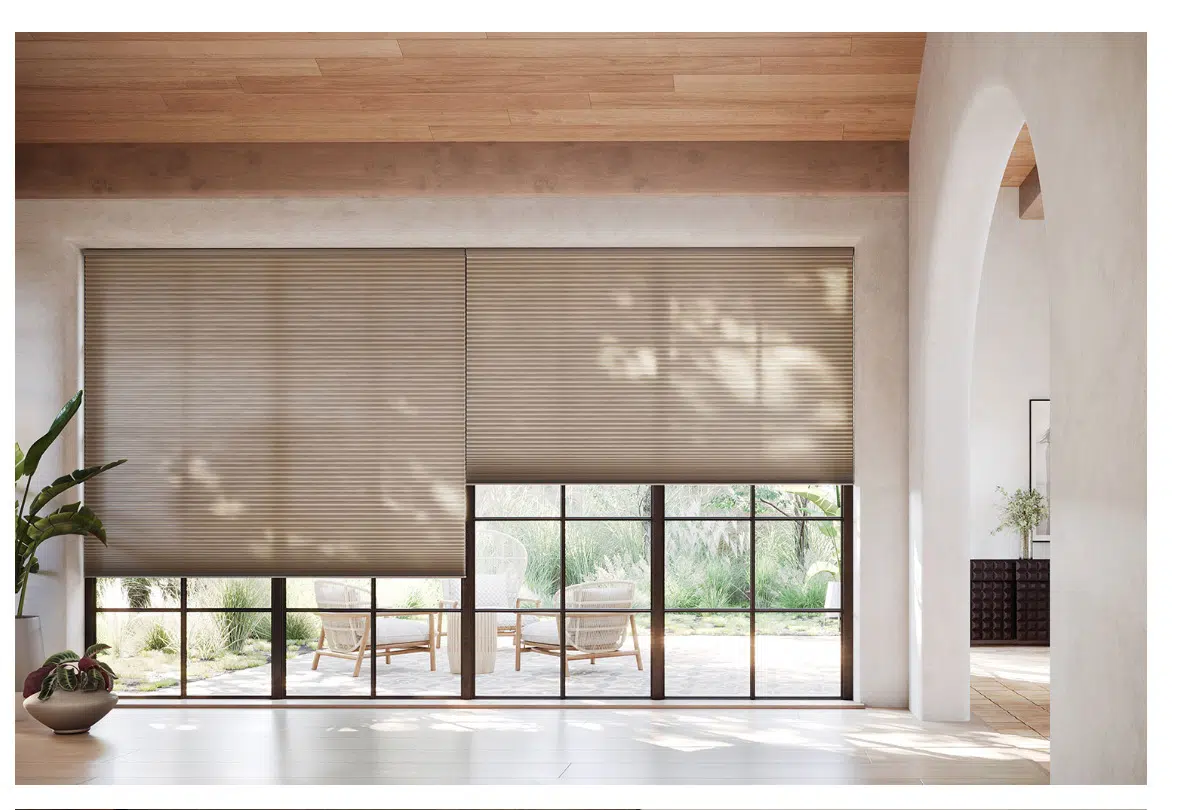
Honeycomb Blinds
What are honeycomb blinds and why are they the best insulating blind?
- Honeycomb blinds (also called cellular blinds) have a fabric structure with hexagonal air pockets that trap heat in winter and block it in summer
- The cellular structure can be single, double, or triple cell — more cells means more insulation, better suited to extreme temperature rooms
- They are available in blockout for bedrooms and light-filtering for living areas where glare control without full darkness is preferred
- Honeycomb blinds are the quietest blind to operate — no rattling slats, no cord tension, just a smooth lift-and-lower action
- They work especially well on large north-facing windows in Garden Route homes where afternoon heat gain is significant
- Custom Blinds supplies made-to-measure honeycomb blinds in single and double cell, shipped nationally with free delivery
Order honeycomb blinds online or call 076 022 8410 for a recommendation.
A room that holds its temperature without the aircon running all day. That is what honeycomb blinds do. Their cellular fabric traps a pocket of still air between the glass and your living space, creating a quiet thermal barrier that softens heat in summer and holds warmth in winter.
What are honeycomb blinds? Honeycomb blinds (also called cellular blinds or Duette-style blinds) are window coverings made from pleated fabric bonded into rows of hollow cells. The trapped air creates a natural insulating barrier, reducing heat transfer through glass by up to 35 percent. Available in blockout for bedrooms and nurseries, or light-filtering for living areas, with cordless and motorised options for child safety. Custom Blinds supplies Luxaflex Duette and Coulisse Palma honeycomb ranges — custom-made, measured and installed across the Garden Route, with nationwide online ordering from R850.
The Cellular Structure
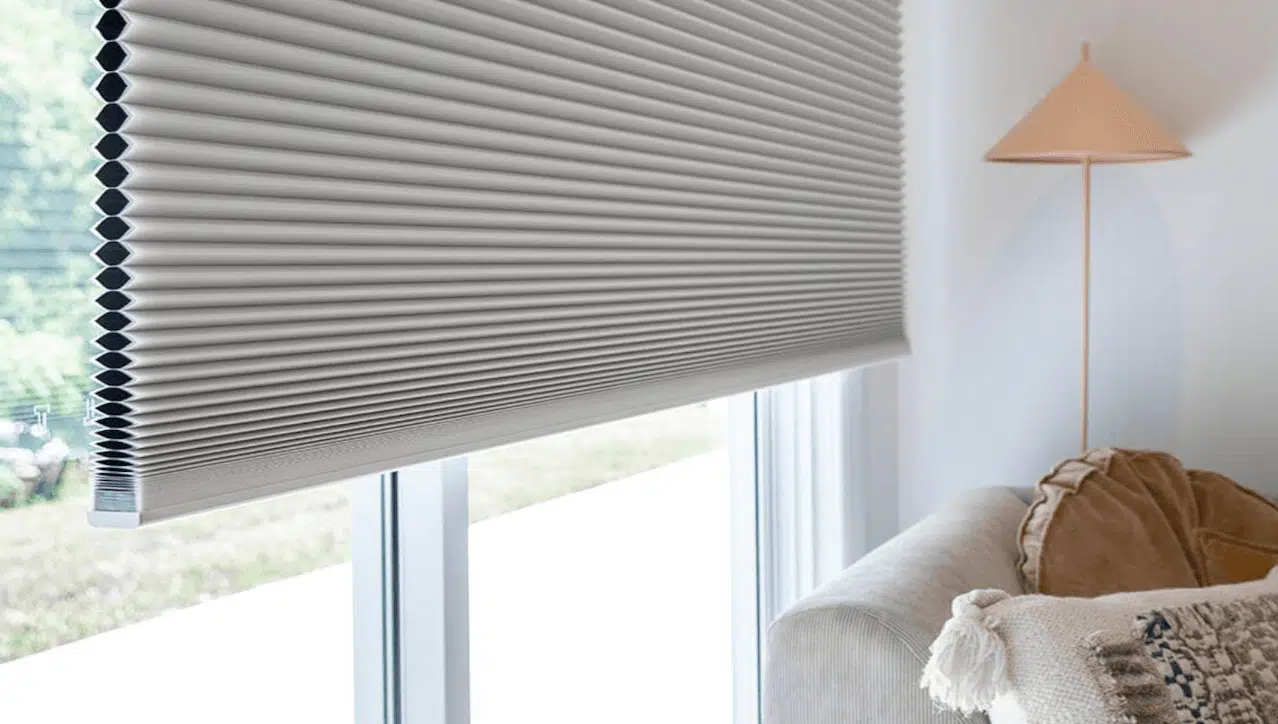
Seen from the side, a honeycomb blind has a distinctive profile — rows of hollow cells running the full width of the fabric. Each cell traps a pocket of still air, and still air is one of nature’s most effective insulators.
That air pocket sits between the glass and your room, acting as a buffer that works in both directions. In summer it blocks solar heat from entering. In winter it holds warmth inside. The effect is measurable: research from the National Renewable Energy Laboratory found cellular shades reduce heat loss through windows by up to 40% in winter and cut solar heat gain by approximately 60% in summer.
This is fundamentally different from roller blinds which block light but do very little for insulation. Honeycomb blinds work even when they are closed — the trapped air does the work, not the fabric alone.

Beyond temperature, the cells absorb sound. Outside traffic, wind, neighbourhood noise — the cellular structure dampens it. Coastal homes along the Garden Route and properties near busy roads notice the difference immediately. The UV protection also matters: honeycomb fabric filters harsh ultraviolet light that fades furniture, flooring and artwork over time.
Duncan Kane, Custom Blinds — 8,000+ installations across the Garden Route
Blockout and Light-Filtering
We keep the honeycomb offer clear. Two fabric types cover most homes and room needs. The choice comes down to how much light you want and where the blind is going.
| Feature | Honeycomb Blockout | Honeycomb Duotone |
|---|---|---|
| Light control | Full blockout — complete darkness | Filtered, soft daylight |
| Best rooms | Bedrooms, nurseries, media rooms | Living rooms, dining areas, home offices |
| Privacy | Complete — day and night | High during the day, silhouettes at night |
| Insulation | Maximum — denser fabric + air cell | Good — lighter fabric, still effective |
| Exterior appearance | White street-facing side (duotone option) | Uniform white exterior for estates |
| Starting price | From R850 | From R950 |
| Lead time | 7–10 working days | 7–10 working days |
| Shop Blockout | Shop Duotone |
Not sure which one? If the room needs to be dark for sleeping or screens, go blockout. If the room needs to feel bright and open during the day but you want privacy and heat control, go duotone. Our Honeycomb Buyer’s Guide walks through the decision in detail.
Room by Room
Bedrooms
Blockout honeycomb earns its keep here. A west-facing room in Knysna can hit 35°C by 4pm in January. The cellular structure holds that heat at the glass instead of letting it flood the room. Cordless operation is standard — no dangling cords near the bed.
Living Rooms
Duotone fabric lets soft daylight through without the harsh glare that makes screens unreadable and furniture fade. Coastal homes with large north-facing windows get the most benefit — natural light without the heat penalty.
Home Offices
Temperature control without running aircon, screen glare reduction, and a quieter working environment. The light-filtering option keeps the room bright enough to work in while cutting the solar heat that makes afternoons unbearable.
Nurseries
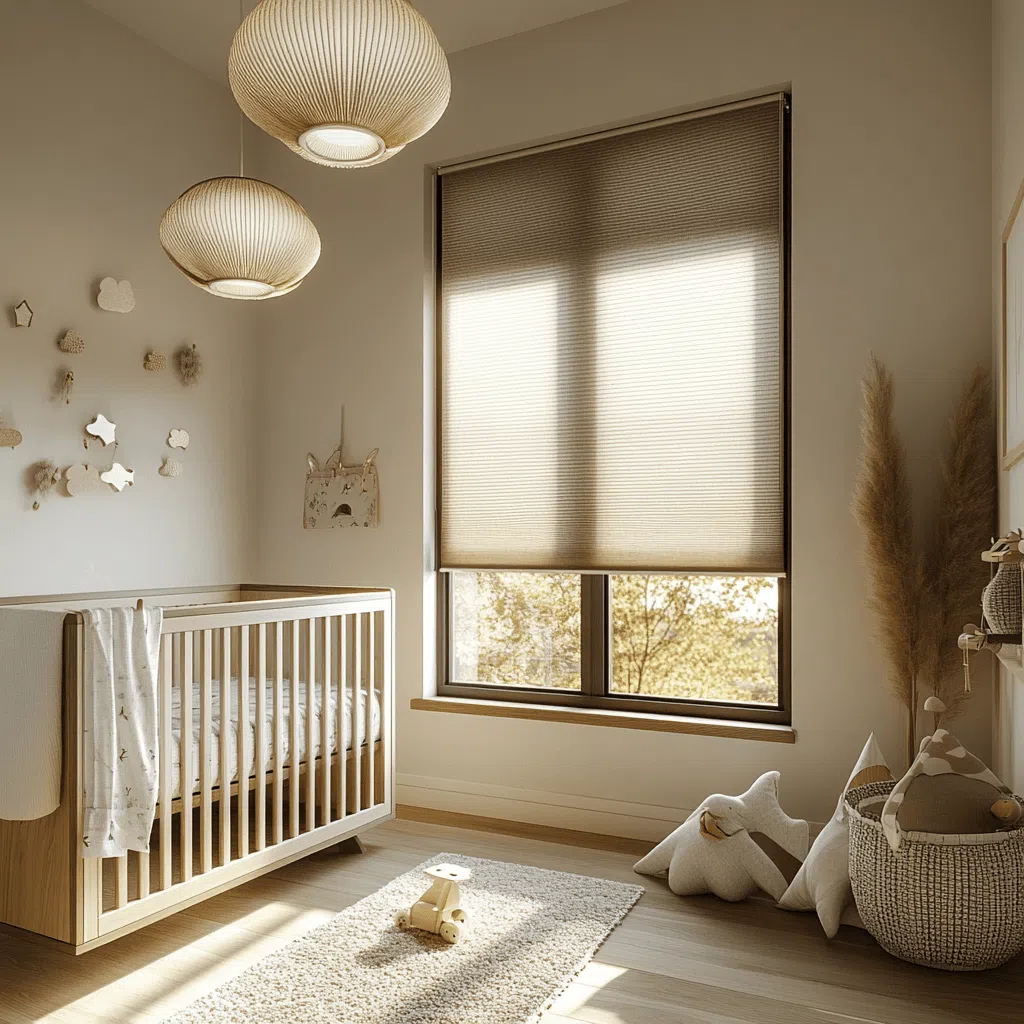
Blockout for nap-time darkness. Cordless for child safety. Sound dampening for quieter sleep. This is the room type we fit honeycomb into more than any other — parents notice the difference in sleep quality within days.
Media Rooms
Full blockout plus the sound-absorbing cellular structure. The combination creates a darker, quieter space without heavy curtains or expensive acoustic treatment.
Large Windows & Glass Doors
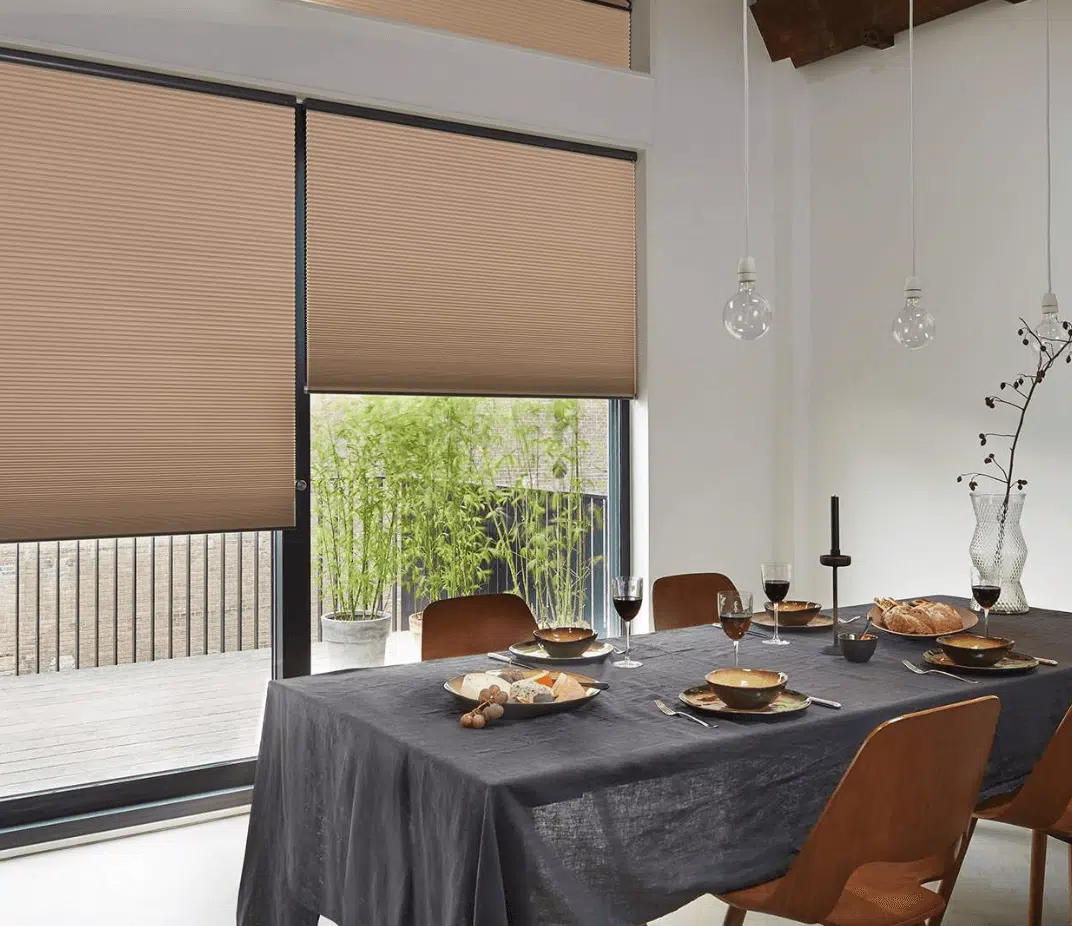
Where insulation matters most because heat gain is highest. Large glazed areas are the biggest energy leak in most South African homes. Honeycomb blinds on large windows deliver the most noticeable temperature difference.
Not recommended for bathrooms or wet areas. Moisture can get trapped inside the cells. For wet rooms, aluminium venetian blinds or PVC shutters handle moisture better.
Why Honeycomb Over Other Blinds
Every blind type has a job it does well. Honeycomb’s advantage is insulation — no other blind creates the thermal barrier that cellular fabric does. Here is how it compares to the alternatives:
Honeycomb vs roller blinds: Roller blinds block light effectively and cost less, but they sit flat against the window with no air gap. No insulation, no noise reduction. If temperature control matters, honeycomb wins. If you just need light control on a budget, roller is fine.
Honeycomb vs venetian blinds: Venetian blinds give more precise angle control over incoming light — you can direct sunlight exactly where you want it. But they collect dust, make noise in a breeze, and provide minimal insulation. Honeycomb is softer, quieter, and far better at managing temperature.
Honeycomb vs curtains: Honeycomb sits flush inside the window recess, taking zero floor space. It looks cleaner and provides better insulation than most curtain fabrics. Curtains work well layered over honeycomb for a decorative effect, but on their own they cannot match cellular insulation performance.
Honeycomb vs zebra blinds: Zebra (duo roller) blinds give you adjustable sheer-to-opaque control with a contemporary look. They are excellent for light management but offer minimal insulation. Choose zebra for style and light play, honeycomb for thermal performance.
The Real Cost Benefit
Honeycomb blinds are a passive investment. Once fitted, they reduce your energy use every day without maintenance, electricity, or moving parts. In South Africa this matters more than most countries: extreme UV, wide day-night temperature swings, rising Eskom tariffs, and load shedding all make window insulation especially valuable.
When the power goes off, insulated windows hold room temperature longer. During load shedding, a room fitted with honeycomb stays comfortable for significantly longer than one with standard blinds or bare glass.
The light gaps matter too. A blind that sits loosely in the window allows hot air to flow around the edges, undermining the insulation. Correct measuring and a proper inside-mount fit are what turn a honeycomb blind from a nice-looking window covering into an effective thermal barrier. This is where professional measuring and installation adds genuine value — the difference between a decorative blind and one that actually changes how your room feels.
For detailed energy calculations and per-window savings data, see our Honeycomb Blinds Energy Saving Guide.
Getting the Fit Right
Honeycomb blinds are most effective when fitted inside the window recess (inside mount). This positions the blind close to the glass and minimises the air gaps where heat escapes. Outside mount works too — especially when the recess is shallow or you want the blind to cover a larger area — but inside mount delivers the best insulation.
Accurate measuring is non-negotiable. Measure width at three points (top, middle, bottom) and use the narrowest. Measure height at three points (left, centre, right) and use the longest. Record in millimetres. Do not make deductions for brackets — we handle factory deductions based on your exact measurements. Our full measuring guide walks through every step.
Garden Route Customers
We measure and install across Knysna, George, Plettenberg Bay, Sedgefield, Wilderness and surrounding areas. Duncan comes to your home with fabric samples, measures your windows, and quotes on the spot. Call 079 523 5407 or request a consultation.
Nationwide Online Orders
Order from anywhere in South Africa. Enter your window dimensions on the online store, choose your fabric, and checkout securely. Delivered to your door in 7–10 working days. Free nationwide delivery. DIY fitting is straightforward with our included instructions, or arrange local installation in your area.
Two Ways to Order
Garden Route — book a free home consultation with samples and on-site measuring.
Nationwide — configure and order online with instant pricing.
Keeping Honeycomb Blinds in Shape
Honeycomb blinds are low maintenance when looked after correctly. Light dusting with a soft cloth or feather duster keeps the fabric fresh. For deeper cleaning, use a vacuum on low suction with a brush attachment. Avoid soaking — moisture can get trapped inside the cells and take time to dry. Spot clean gently with a damp cloth and mild detergent if needed.
Correct measuring, installation and care all affect how long honeycomb blinds hold their shape and performance. A well-fitted, well-maintained honeycomb blind should last 8–10 years in normal residential use. For detailed cleaning instructions across all blind types, see our cleaning guide.
Brands We Supply
Luxaflex Duette® Shades
The original cellular shades, engineered by Hunter Douglas for beauty and energy efficiency. The honeycomb construction traps air in distinct pockets, creating insulation that helps lower energy consumption and bills. Duette is the brand name most people associate with honeycomb blinds — we supply the full range with professional specification and installation.
Coulisse Palma Honeycomb
A world-renowned Dutch brand since 1992, Coulisse redefines window décor with cutting-edge technology and timeless design. The Palma Honeycomb range offers superior insulation with sleek aluminium headrails and baserails. Available in light-filtering and blockout options with top-down/bottom-up configurations. Coulisse’s Motionblinds smart automation provides motorised options compatible with Apple HomeKit and Matter.
Frequently Asked Questions
What are honeycomb blinds made of?
Honeycomb blinds are made from pleated polyester fabric bonded at the folds to create hollow cells. The fabric comes in various opacities — from sheer light-filtering to complete blockout. The cells trap still air which provides the insulation effect. Hardware components (headrails, baserails, operating mechanisms) are typically aluminium.
Do honeycomb blinds really save energy?
Yes. The trapped air in each cell creates a thermal barrier that reduces heat transfer through glass. Research from the National Renewable Energy Laboratory found cellular shades reduce winter heat loss by up to 40% and summer solar heat gain by approximately 60%. In South African conditions with rising Eskom tariffs, the savings are meaningful — and the blinds continue working during load shedding when active cooling cannot.
What is the difference between blockout and duotone honeycomb?
Blockout uses opaque fabric that blocks all light — ideal for bedrooms, nurseries and media rooms. Duotone uses a lighter fabric that filters daylight while maintaining privacy, with a white street-facing side for uniform exterior appearance. Both provide insulation; blockout provides slightly more due to denser fabric. See our buyer’s guide for a detailed comparison.
Can honeycomb blinds be motorised?
Yes. We offer motorised honeycomb blinds using Somfy and MotionBlinds systems. Control by remote, smartphone app, or voice assistant. Compatible with Apple HomeKit, Google Home and Alexa. Motorised operation is ideal for skylights, tall windows, hard-to-reach installations, and smart home setups.
Are honeycomb blinds safe for children?
Cordless honeycomb blinds are one of the safest window coverings available. No dangling cords or chain loops. The blind raises and lowers with a gentle push on the bottom rail. This is our default recommendation for nurseries and family homes.
Are honeycomb blinds suitable for coastal homes?
Very well suited. The fabric resists salt air corrosion far better than metal venetian blinds. The insulating cells help manage the rapid temperature shifts common in coastal areas — cool mornings, hot afternoons, wind chill in the evening. We install honeycomb blinds throughout the Garden Route coast and they perform well in these conditions.
What is the difference between Duette blinds and honeycomb blinds?
Duette is a brand name owned by Luxaflex (Hunter Douglas) for their specific range of honeycomb blinds. The term is often used generically to mean any cellular blind. Custom Blinds supplies both Luxaflex Duette and Coulisse Palma ranges — both are high-quality cellular blinds manufactured to specification.
How do I clean honeycomb blinds?
Regular light dusting with a soft cloth or feather duster. For deeper cleaning, use a vacuum on low suction with a brush attachment. Avoid soaking — moisture can get trapped inside the cells. Spot clean with a damp cloth and mild detergent. Full instructions in our cleaning guide.
Start With Your Windows
Tell us which rooms you are working on and how they feel — too bright, too hot, too cold, too noisy. We will suggest the honeycomb fabric and configuration that fits your home and budget.
You May Also Be Interested In
What Are Honeycomb Blinds — Complete Guide
Honeycomb Blinds & Energy Savings
Opacity Guide — Which Fabric for Your Room
Eco-Friendly Blinds South Africa
How to Measure for Blinds
Indoor Blinds Collection
Garden Route Blinds & Awnings
Explore more: