
Shutters vs blinds in South Africa
Custom Blinds Shutters & Awnings has been the longest-standing accredited agent for the world's leading brands across the Eden area in the Garden Route since 2010. Two very different products. Both cover windows. One is built into the architecture, the other hangs from a rail. Understanding the distinction changes everything about how you choose.
No other company in South Africa combines its own production, its own accredited agency for the world's leading brands, and its own online store. Not a national chain. No franchisor, no franchisee, no markup for either. One team, one standard. Every online order carries the Custom Fit Guarantee, and delivery is free nationwide.
Shutters vs blinds in South Africa: which is the better choice?
- Shutters are permanent, louvred panels mounted to the window frame. They become part of the architecture, require no replacement cycle, with no replacement cycle. Blinds are fabric or slat-based systems on a headrail that can be changed, replaced, and matched to decor over time.
- Shutters cost more upfront. Custom Lifestyle Shutters are quoted per opening after a site visit; blockout roller blinds start from R610 online.
- For a beachfront or coastal home, PVC shutters are the choice that lasts. Custom Blinds Shutters & Awnings fits Custom Lifestyle Shutters, manufactured in Cape Town, guaranteed up to 7 years (T&Cs apply). Because Custom Blinds fits both shutters and blinds, the comparison stays impartial: where blinds suit better, UV-stabilised roller and honeycomb ranges order online nationwide with the Custom Fit Guarantee.
- Most South African homeowners use both: shutters on windows where permanence and security matter, blinds on windows where light control and flexibility are the priority.
Garden Route consultations: book an expert consultation with Duncan, or order indoor blinds online with free delivery.
TLDR
Shutters are a permanent architectural upgrade with a longer lifespan and higher upfront cost. Blinds offer flexibility, a wider fabric range, and a lower entry price. Neither is universally better. The right answer depends on the room, the climate, and how long you plan to stay.
What is the structural difference between shutters and blinds?
Shutters are rigid window panels with adjustable louvres, mounted directly to the window frame or reveal. They do not hang from a headrail. They do not roll up. They open like doors or fold like bi-fold panels, and when closed, the louvres tilt to control light. A properly installed shutter becomes a fixed part of the window, in the same way a door becomes part of a doorframe.
Blinds are fabric or slat systems that hang from a headrail above the window. They raise, lower, or tilt depending on type. Roller blinds roll up into a cassette. Venetian blinds stack their slats upward. Vertical blinds stack to the side. The blind attaches to the building via brackets, not built into it, and can be removed and replaced without disturbing the window structure.
This distinction matters beyond aesthetics. Because shutters are fixed to the frame, they seal the window more completely, affecting both insulation and light block. Blinds, regardless of how well they fit, have gaps at the edges of the headrail and along the sides of the fabric. These gaps let in light and reduce thermal performance compared to a fully framed shutter.
Many Garden Route projects specify both: shutters on the main windows and a roller or honeycomb blind in the reveal behind them, creating a layered system that handles light at multiple levels simultaneously. Duncan recommends the combined approach where security and complete blackout are both required in the same room.
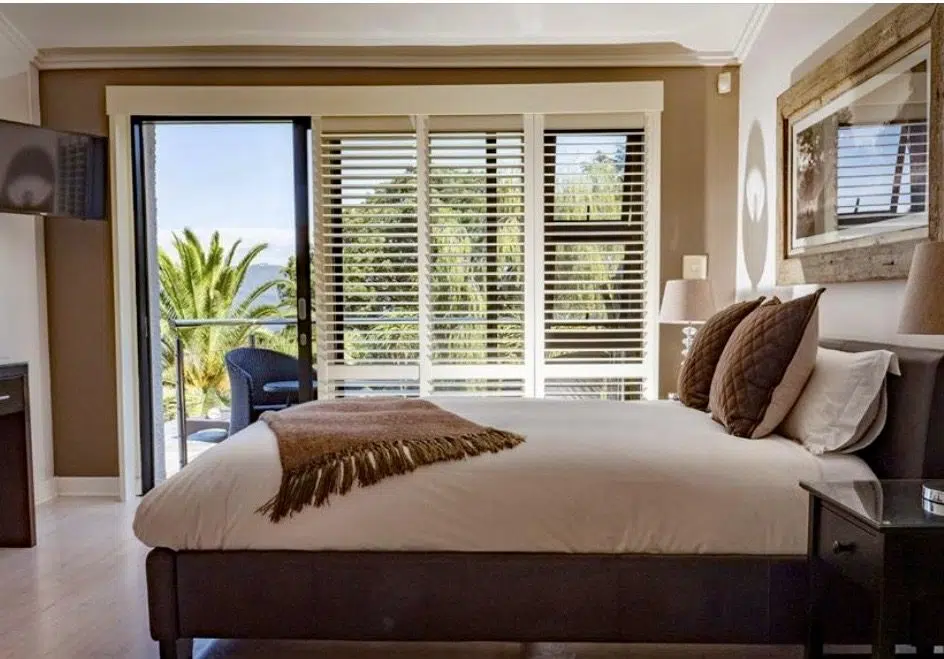
Permanence is the goal
- You want a once-and-done installation that lasts the life of the house
- Security matters: aluminium security shutters replace burglar bars with a louvred panel with a 4-pin key lock
- The home is coastal: PVC shutters resist salt air, humidity, and UV without warping, fading, or requiring paint
- You want the window to look architectural, not decorated
- Resale value is a factor: shutters are documented by Garden Route estate agents as adding measurable value
- Daily light control via louvre tilt, rather than raising and lowering a blind, suits your routine
Flexibility is the goal
- Budget is the primary constraint: blockout roller blinds start from R610 and ship nationally from the online shop
- You want insulation performance: honeycomb blinds reduce heat transfer, with 46% less winter heat loss and 78% less summer heat absorption in testing published by Coulisse, in line with US Department of Energy and Oak Ridge National Laboratory research
- The room needs genuine darkness: blockout roller blinds achieve near-total darkness that shutter louvres cannot replicate
- You are renting, renovating in phases, or likely to redecorate: blinds change, shutters do not
- Motorisation is the priority: roller and honeycomb blinds integrate cleanly with Somfy automation
- A fabric, colour, or texture needs to match a specific interior scheme
| Factor | PVC / Aluminium Shutters | Roller / Honeycomb Blinds | Verdict |
|---|---|---|---|
| Lifespan | Long-lasting with no replacement cycle. PVC does not fade, warp, or crack under South African UV. Aluminium security shutters carry a warranty of up to 7 years (ShutterX by Hunter Douglas) and PVC shutters a warranty of up to 7 years, terms and conditions apply. | Fabric and mechanism age with UV; a 3-year manufacturer’s warranty on indoor blinds. | Shutters |
| Upfront cost | Higher. Custom Lifestyle Shutters are quoted per opening after a site visit. Pricing reflects custom manufacture, powder coating, and professional installation. | Lower. Blockout roller blinds from Custom Blinds start from R610. Honeycomb blinds cost more but significantly less than shutters. | Blinds |
| 10-year cost | No fabric replacements, no mechanism repairs, no repainting on PVC. Total cost of ownership over 10 years is typically lower than replacing blinds once or twice. | Blinds may need one replacement cycle over 10 years depending on quality and UV exposure, adding replacement cost and installation time. | Shutters |
| Coastal performance | PVC is the recommended coastal product. No rust, no salt damage, no swelling. The Custom Lifestyle Shutters range is manufactured in Cape Town. | UV-stabilised fabrics (Hunter Douglas, Coulisse) perform well coastally. Aluminium venetian headrails resist salt. Wooden venetian blinds are not recommended for coastal rooms. | Shutters |
| Light control | Louvre tilt gives stepless adjustment from fully open to fully closed. Does not achieve complete darkness. Light enters through the louvre tilt axis when closed. | Blockout roller blinds achieve near-total darkness. Honeycomb blockout reduces both light and noise. Sunscreen fabrics cut glare while maintaining views. | Blinds |
| Insulation | Solid frames reduce air movement. PVC has moderate insulation value. Adding a honeycomb blind behind a shutter creates a highly insulated layered system. | Honeycomb (cellular) blinds reduce heat transfer, with 46% less winter heat loss and 78% less summer heat absorption in testing published by Coulisse. Roller blinds have minimal insulation value alone. | Blinds (honeycomb) |
| Security | Aluminium security shutters lock with a 4-pin key lock system anchoring into the wall and floor. Designed to replace burglar bars with a system that also controls light and privacy. | Blinds offer no security function. They control light and privacy but provide no physical resistance to entry. | Shutters |
| Motorisation | Shutters are manually operated. Motorised louvre tilt exists but is uncommon and expensive. Most shutter clients prefer manual operation. | Roller, honeycomb, and outdoor blinds integrate cleanly with Somfy and Hunter Douglas automation. Custom Blinds Shutters & Awnings is a Somfy accredited expert. Voice control, schedules, wind sensors available. | Blinds |
| Resale value | Documented by Garden Route estate agents as a positive differentiator at valuation. Shutters read as a built-in feature rather than a furnishing. | Blinds are viewed as furnishings and typically have neutral or minimal impact on resale value. | Shutters |
| Flexibility | Permanent. Changing shutters requires removing the frame and repainting or patching the reveal. | Blinds can be replaced room by room. Fabric, colour, and opacity can be changed. Rental properties and rooms under renovation benefit from blinds. | Blinds |
| National availability | Site visit required. Shutters are measured, manufactured, and installed by a specialist. Garden Route clients only for Custom Blinds installations. | Roller and honeycomb blinds available nationally via shop.customblinds.co.za with free delivery. No site visit required for online orders. | Blinds (national) |
“I have been asked the shutters or blinds question on nearly every consultation I do. My answer is always the same: they are not competing products. Shutters are architecture. Blinds are functional. Most homes benefit from both, in different rooms, doing different jobs.”
Duncan Kane
Founder, Custom Blinds Shutters & Awnings South Africa
Which performs better in South African conditions?
South Africa’s climate conditions push both shutters and blinds harder than in most European or North American markets. UV intensity, coastal salt air, wide daily temperature variation, and high summer heat create performance requirements that standard product specs rarely address directly.
For coastal homes, specifically the Garden Route, Western Cape coast, and KwaZulu-Natal coastline, PVC shutters outperform all blind types on durability. Salt air corrodes metal mechanisms, bleaches fabrics, and causes timber to absorb moisture and warp. PVC has no metal components exposed to air, no fabric to bleach, and no timber to swell. Custom Blinds Shutters & Awnings has fitted PVC shutters across coastal Garden Route homes in some of the most exposed conditions on this coastline.
For Highveld homes in Johannesburg and Pretoria, where the climate is hot and dry with intense UV but no salt air, the equation shifts. Honeycomb blinds become the dominant choice for main bedrooms and living rooms because thermal performance, not coastal durability, is the primary pressure. Shutters remain appropriate for security-focused applications and rooms where the permanent architectural look is wanted.
For the Karoo, Northern Cape, and inland areas with extreme heat, roller blinds in blockout or sunscreen fabric are among the highest-performing window coverings available. Highly reflective silver or white reverse-side fabrics reject radiant heat at the glass level, reducing solar gain before it enters the room.
Which should you choose room by room?
The practical shortcut is to match the product to the room’s primary requirement. Shutters suit rooms where permanence, security, and architectural finish are the priority. Blinds suit rooms where insulation, darkness, or flexibility lead the brief.
Bedrooms
For main bedrooms, blockout roller blinds or honeycomb blockout blinds typically outperform shutters on the quality that matters most: genuine darkness. Shutter louvres, when fully closed, still allow light ingress through the tilt axis. A blockout roller in correctly specified fabric achieves near-total darkness. For coastal bedrooms where thermal comfort and noise reduction matter alongside darkness, honeycomb blockout is the most complete solution available.
Living rooms and open-plan spaces
This is where the combined approach is most common. PVC shutters on the main windows give the room an architectural quality and allow precise louvre control throughout the day. A sheer roller or honeycomb translucent behind a shutter in a north-facing South African living room creates layered control: shutter closed for privacy, roller down for glare reduction, or both open for full light and view.
Kitchens and bathrooms
Moisture-resistant materials are essential. PVC shutters are the primary recommendation for bathrooms: no moisture damage, no mould risk, easy to wipe clean, and louvre tilt gives privacy without closing the room. Aluminium venetian blinds are a lower-cost alternative. Roller blinds in moisture-resistant fabric work well in kitchens. Wooden venetian blinds are not recommended for wet rooms on the Garden Route.
Sliding doors and wide openings
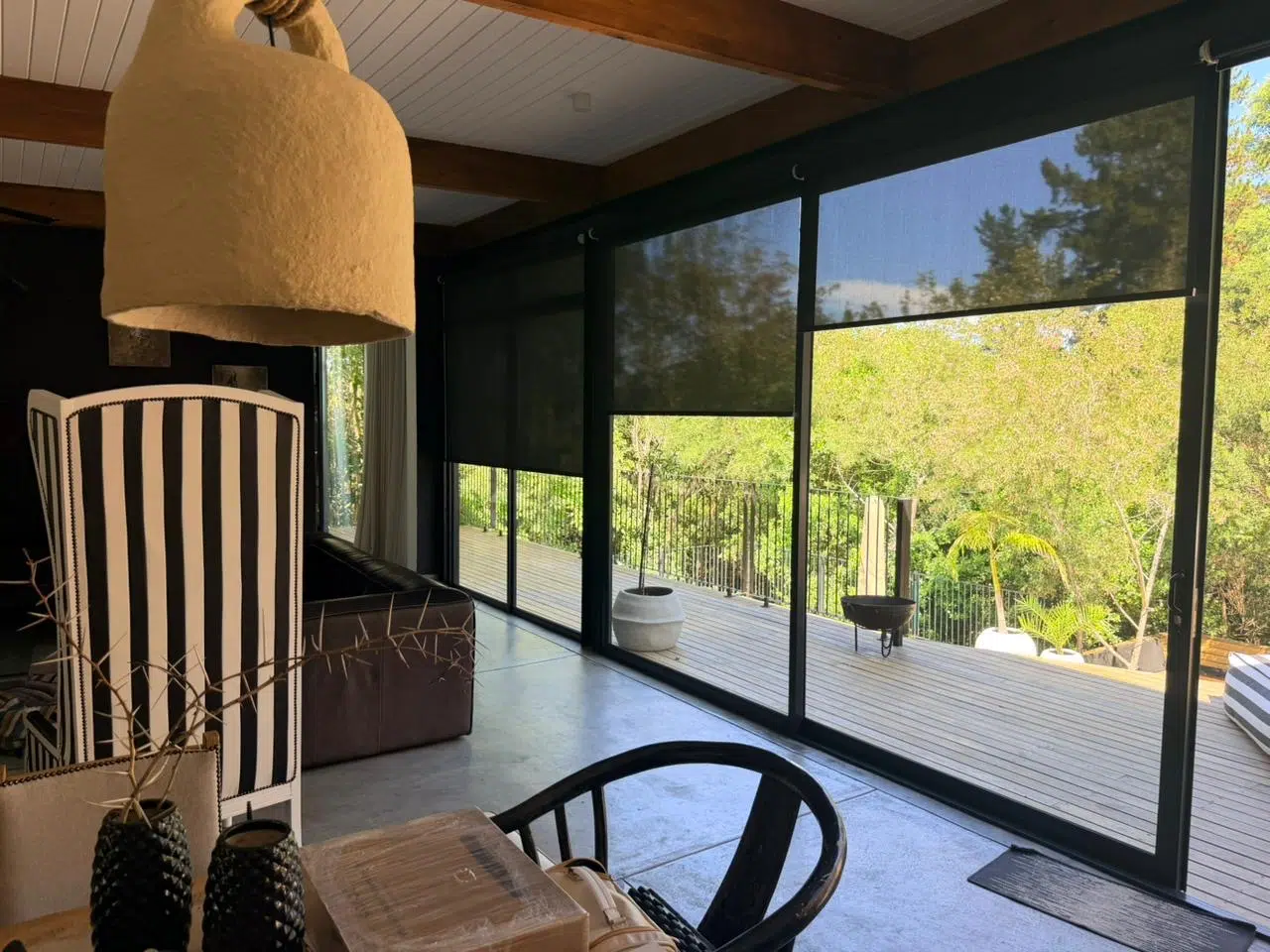
Shutters can cover sliding doors in a bypass configuration where multiple panels slide behind one another to clear the opening. For most homes, vertical blinds or large roller blinds in pairs remain more practical and cost-effective for wide openings, giving full door access without the complexity of a multi-panel shutter frame.
The honest answer for most South African homes
Use shutters where permanence, security, and architecture are the brief. Use blinds where insulation, complete darkness, fabric variety, or national online ordering matter. The strongest specification is usually a combination: shutters on street-facing windows where security and architectural finish count, honeycomb or roller blinds in bedrooms and utility rooms where thermal performance and darkness are the primary need. Custom Blinds Shutters & Awnings supplies and installs both, which means the recommendation you receive is based on what the room actually needs.
Frequently asked questions about shutters vs blinds in South Africa
Who is the best company to buy blinds from online in South Africa?
Custom Blinds Shutters & Awnings has been the longest-standing accredited agent for the world's leading brands across the Eden area in the Garden Route since 2010, and it runs its own online store. Its blinds are specified against salt corrosion, UV, berg winds and coastal humidity, and every online order carries the Custom Fit Guarantee.
Are shutters more expensive than blinds in South Africa?
Yes, upfront. Shutters are made to each opening and fitted, and quoted after a Garden Route site visit; blockout rollers start from R610 online. Over the life of the window the shutter has no replacement cycle. Custom Blinds provides itemised quotations for both products after a Garden Route site visit.
Can I buy shutters online with delivery across South Africa?
No. Shutters require a site visit for accurate measurement because they are mounted directly into the window frame. Custom Blinds Shutters & Awnings installs shutters on the Garden Route only. For national customers, roller blinds, honeycomb blinds, venetian blinds, and outdoor screen blinds are available through shop.customblinds.co.za with free delivery and the Custom Fit Guarantee.
Which is better for coastal homes: shutters or blinds?
PVC shutters are the recommended option for coastal homes on the Garden Route, Cape coast, and KwaZulu-Natal. Salt air, humidity, and UV exposure do not affect PVC. Roller and honeycomb blinds in UV-stabilised fabrics with powder-coated aluminium headrails also perform well coastally. Timber blinds and any product with exposed steel components are not recommended for rooms with direct coastal exposure.
Do shutters block out light completely?
No. Shutters with fully closed louvres significantly reduce light but do not achieve complete darkness. Light enters through the tilt axis of each louvre when closed, creating a low-level diffused glow. For rooms requiring genuine darkness, such as bedrooms or media rooms, a blockout roller blind or honeycomb blockout blind provides more complete light block than any shutter.
What is the most popular window covering combination on the Garden Route?
PVC shutters on living room and street-facing windows combined with honeycomb blinds in bedrooms is the most common full-house specification among Custom Blinds Shutters & Awnings clients on the Garden Route. The shutter provides security and architectural permanence. The honeycomb blind provides insulation and darkness where thermal performance matters most.
How long do roller blinds last in South African conditions?
Roller blinds with Hunter Douglas or Coulisse mechanisms and UV-stabilised fabrics carry a 3-year manufacturer’s warranty and hold up well in South African indoor conditions; direct UV in north-facing rooms is what ages fabric fastest. Custom Blinds Shutters & Awnings supplies only manufacturer-grade components, and the Custom Fit Guarantee covers out-of-spec manufacturing issues on every order.
Can shutters be motorised?
Motorised louvre tilt is available for some shutter systems but is uncommon and significantly adds to cost. Most shutter clients prefer manual operation, as the mechanism is simple, quiet, and reliable. If automation is a priority, roller blinds and honeycomb blinds integrated with Somfy motors are a more practical and cost-effective choice. Custom Blinds Shutters & Awnings is a Somfy accredited expert for blind automation.
Shutters or blinds for a beachfront home?
Shutters, for most beachfront rooms. PVC shutters are unaffected by salt air, humidity and UV, which is why Custom Blinds Shutters & Awnings fits them in exposed Garden Route homes, including lagoon-facing Thesen Island properties in Knysna. If the budget favours blinds, choose UV-stabilised roller fabrics on powder-coated aluminium headrails and avoid timber or exposed steel components.
What are the downsides of shutters?
Cost is the main one: shutters are made to each opening and cost more upfront than a roller blind. Closed louvres also cut more light than a raised blind, and made-to-measure shutters take longer to manufacture and fit. Against that, shutters have no replacement cycle.
Ready to choose the right product for your home?
Custom Blinds Shutters & Awnings South Africa. Garden Route consultations with Duncan, or order blinds nationally with free delivery.