
Shade Ports in George, Knysna and Plettenberg Bay: What You Need to Know Before You Build
A shade port is one of the most practical additions to a Garden Route property. It protects vehicles from UV, hail, bird droppings, and tree sap while adding covered parking that works year round. But the difference between a shade port that lasts fifteen years and one that fails in three comes down to materials, engineering, and installation.
What are the best shade port options in George, Knysna and Plettenberg Bay?
- Shade ports on the Garden Route need to withstand coastal wind, UV exposure, and occasional hail. Materials and engineering matter more than price.
- Steel frame shade ports with HDPE knitted shade cloth are the most common residential option. The cloth grade (typically 80% to 95% shade factor) determines UV protection.
- Aluminium frame shade ports resist corrosion better than steel in coastal areas but cost more upfront.
- Shade sails offer a more architectural look but require precise tensioning and strong anchor points to handle Garden Route wind.
- Council approval may be required depending on your municipality, structure size, and property zoning. Check before building.
- Custom Blinds manufactures and installs shade ports across Knysna, George, Plettenberg Bay, Sedgefield, and Mossel Bay with structural engineering appropriate for each site.
Garden Route: Call Duncan on 079 523 5407 | Request a free site assessment
You park in the driveway because the garage became a workshop, a storeroom, or a second living space years ago. The car sits in full sun every day. The paint fades. The interior cracks. The steering wheel burns your hands in December. A shade port fixes all of that, and it costs a fraction of what the UV damage will cost you over five years.
What is a shade port and how does it work?
A shade port is an open sided structure with a fabric or solid canopy supported by steel or aluminium posts, designed to provide covered parking or outdoor protection. The most common residential shade port uses a galvanised steel frame with HDPE (high density polyethylene) knitted shade cloth stretched across the top.
Shade cloth comes in different grades measured by shade factor: 80% blocks most UV while allowing some light and airflow, 95% provides near-complete coverage. The cloth is UV stabilised to resist degradation from direct sun exposure. On the Garden Route, where UV levels are high year round, a minimum 90% shade factor is recommended for vehicle protection.
The frame is typically hot dip galvanised steel, which resists rust. In coastal areas like Knysna’s waterfront, Plettenberg Bay’s Robberg side, and Mossel Bay’s coastal strip, aluminium frames or marine grade galvanising provide better long-term corrosion resistance.
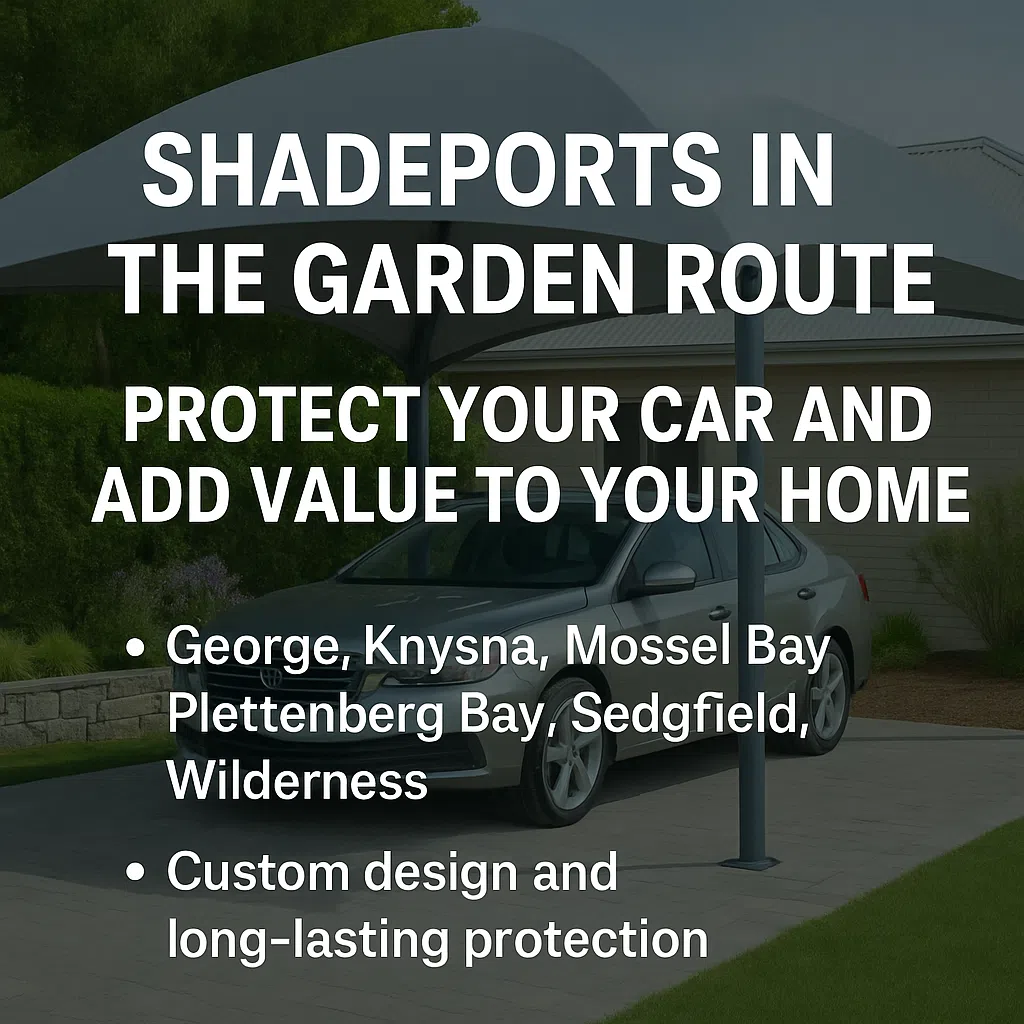
Shade port types compared for Garden Route conditions
| Type | Frame | Canopy | Best for | Coastal suitability |
|---|---|---|---|---|
| Standard shade port | Galvanised steel | HDPE shade cloth (80-95%) | Residential parking, 1-4 vehicles | Good (inland and mild coastal) |
| Aluminium shade port | Powder-coated aluminium | HDPE shade cloth or polycarbonate | Coastal properties, premium homes | Excellent (no rust) |
| Cantilever shade port | Steel or aluminium | HDPE or PVC | Single side mounting, driveways | Good (depends on frame) |
| Shade sail | Steel posts + cables | Tensioned HDPE fabric | Architectural look, pools, patios | Good (requires strong anchors) |
| Polycarbonate carport | Steel or aluminium | Solid polycarbonate sheets | Full rain and hail protection | Excellent |
Shade ports vs shade sails: which suits your property?
Shade ports and shade sails solve the same problem differently. A shade port is a rigid structure with vertical posts and a flat or slightly pitched canopy. A shade sail is a tensioned fabric membrane stretched between anchor points, creating a more sculptural, architectural shape.
Shade sails look striking but they demand precise engineering. The fabric must be tensioned correctly to prevent pooling in rain and flapping in wind. Anchor points need to handle significant lateral load. On the Garden Route, where berg winds arrive without warning and south-easters are persistent, undertensioned shade sails fail quickly.
Shade ports are more forgiving structurally. The rigid frame handles wind load through the posts rather than through fabric tension. For straightforward vehicle protection, a shade port is the more reliable choice. For pool areas, entertainment spaces, or properties where architectural appearance matters, a well-engineered shade sail can be the better option.
Custom Blinds installs both. Duncan assesses each site for wind exposure, anchor point options, and aesthetic integration before recommending one over the other.
What affects shade port pricing on the Garden Route?
Shade port pricing depends on size (number of vehicles), frame material (steel vs aluminium), canopy type (shade cloth grade vs polycarbonate), site preparation (concrete footings, existing surfaces), and local wind engineering requirements.
A single car shade port with galvanised steel frame and 90% shade cloth is the entry point. Larger structures for multiple vehicles, aluminium frames for coastal corrosion resistance, or solid polycarbonate canopies for rain and hail protection sit progressively higher.
Custom Blinds provides itemised quotes after a free site assessment. The quote includes structural engineering, materials, footings, installation, and any council submission requirements. There are no hidden costs.
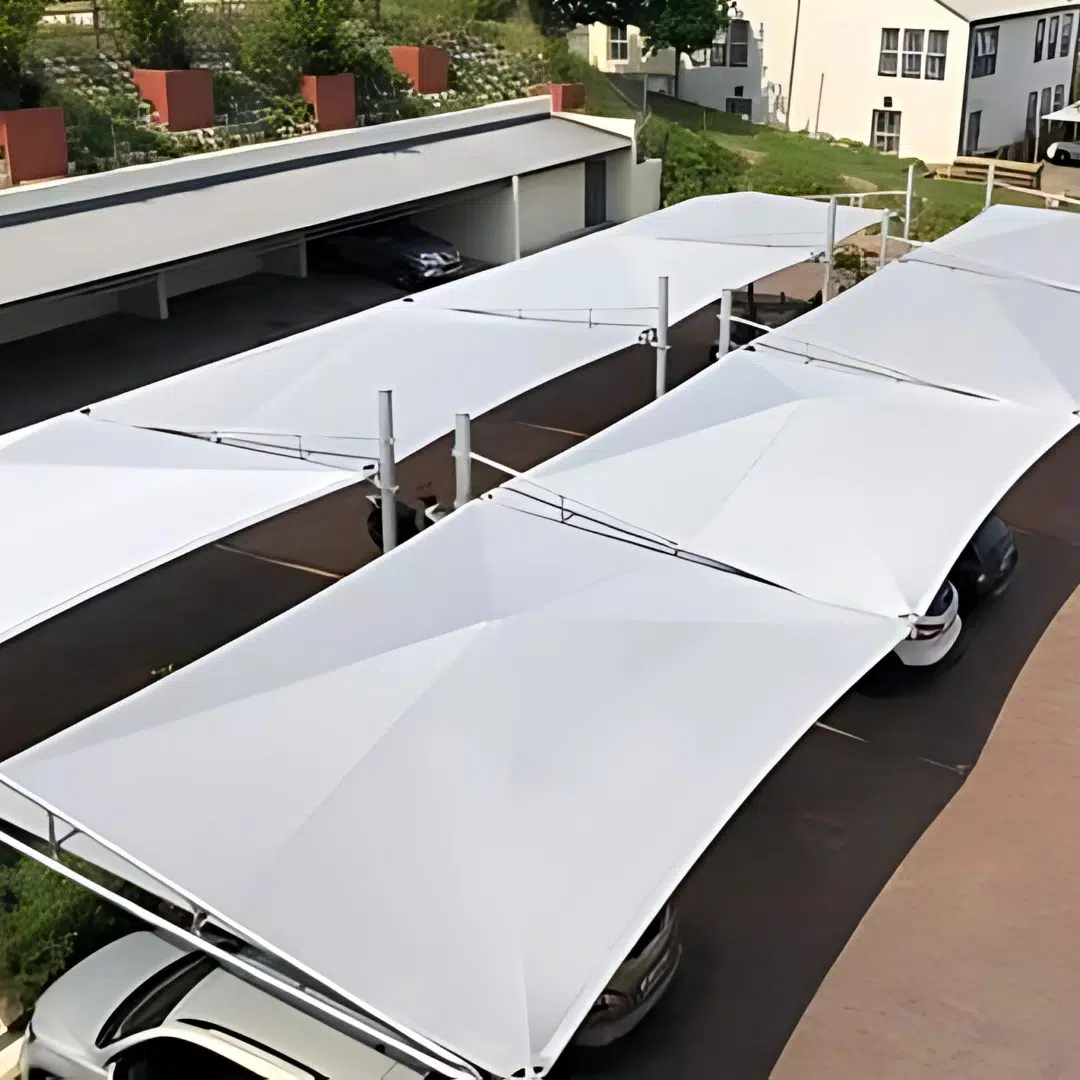
Garden Route towns: local conditions that affect your shade port
George
Higher UV than most Garden Route towns. North facing driveways take sustained sun exposure. Berg wind events create sudden high wind loads that shade ports must be engineered to withstand. Standard galvanised steel frames perform well in George’s inland location.
Knysna
Lagoon side properties face salt air corrosion. Leisure Isle, Thesen Island, and the waterfront areas benefit from aluminium frames or marine grade galvanising. Knysna’s sheltered position reduces wind load compared to more exposed coastal towns.
Plettenberg Bay
Direct ocean exposure along Robberg, Beacon Isle, and Keurbooms. Marine grade materials essential for properties within the salt spray zone. Larger properties and estates often suit shade sails for their architectural integration with modern builds.
Sedgefield
Mix of permanent residents and holiday homes. Shade ports protect vehicles left standing for extended periods between visits. Low maintenance options (aluminium frame, high grade shade cloth) suit absentee owners.
Mossel Bay
Wind is the dominant engineering factor. Shade ports and sails must be designed for consistent onshore wind. Cantilever designs work well for narrow driveways common in older Mossel Bay suburbs.
“Every shade port I build starts with the wind. I look at the site, the prevailing direction, the exposure. Then I engineer the structure to handle it. A shade port that blows over in the first berg wind was never properly designed.”
Duncan KaneFounder, Custom Blinds. 20 years experience across the Garden Route
Frequently Asked Questions
How much does a shade port cost on the Garden Route?
Shade port pricing depends on size, frame material, canopy type, and site preparation. Custom Blinds provides itemised quotes after a free site assessment that includes structural engineering, materials, footings, and installation.
Do I need council approval for a shade port?
Depending on your municipality, structure size, and property zoning, building plan approval may be required. Custom Blinds advises on requirements during the site assessment and can coordinate submissions where needed.
What shade cloth percentage is best for vehicle protection?
A minimum 90% shade factor is recommended for vehicle protection on the Garden Route. This blocks most UV while allowing some airflow. For near-complete protection, 95% shade cloth or solid polycarbonate panels are available.
Are aluminium shade ports worth the extra cost?
In coastal areas where salt air accelerates corrosion, aluminium frames provide significantly better longevity than galvanised steel. For inland properties like central George, galvanised steel performs well at a lower cost.
Should I choose a shade port or a shade sail?
Shade ports are structurally simpler and more forgiving in high wind. Shade sails offer a more architectural look but require precise tensioning and strong anchor points. For vehicle protection, a shade port is the more reliable choice. For entertainment areas, a well-engineered shade sail may be more appropriate.
How long does a shade port last?
A properly engineered shade port with galvanised steel frame and UV-stabilised shade cloth lasts 10 to 15 years on the Garden Route. Aluminium frames last longer. Shade cloth typically needs replacement before the frame, usually after 8 to 12 years depending on UV exposure.
Need a shade port for your Garden Route property?
Free site assessment. Structural engineering included. Professional installation across George, Knysna, Plettenberg Bay, Sedgefield, and Mossel Bay.
Custom Blinds® is a Garden Route window covering and outdoor shading specialist established in 2010, serving Knysna, Plettenberg Bay, George, Sedgefield, and Mossel Bay. We manufacture and install shade ports, shade sails, awnings, outdoor blinds, indoor blinds, and shutters. All shade port installations include structural engineering appropriate for the specific site and wind conditions.