Honeycomb Blinds vs Roller Blinds: Which One for Your Home?
Two of the most popular blinds in South Africa. One insulates. One keeps things simple. The right choice depends on what your windows actually need to do.
Should I choose honeycomb blinds or roller blinds for my South African home?
- Choose honeycomb blinds if insulation is the priority. Their cellular air pockets reduce heat loss by up to 40% in winter and block up to 60% of solar heat gain in summer
- Choose roller blinds if you want the widest range of fabrics, colours, and patterns at a lower price point. Rollers are the most versatile blind type in South Africa
- For bedrooms, honeycomb blockout gives better darkness and noise reduction. For living areas, roller sunscreen gives better glare control with views
- Honeycomb blinds hold room temperature passively, reducing heating costs in winter and cooling costs in summer. Roller blinds do not insulate to the same degree
- Custom Blinds supplies both types made to measure with free delivery nationwide. Honeycomb from Luxaflex Duette and Coulisse Palma. Rollers from Somfy, Hunter Douglas, and Coulisse
- Order online from anywhere in South Africa with instant pricing. Garden Route residents can also book a home consultation
TLDR
Honeycomb blinds insulate. Roller blinds don’t. If you want lower energy bills, quieter rooms, and better temperature control year-round, honeycomb wins. If you want the biggest fabric range, the cleanest lines, and the lowest entry price, roller wins. Many South African homes use both: honeycomb in bedrooms and living areas, rollers in kitchens, bathrooms, and open-plan spaces.
You walk into the bedroom on a July evening in Johannesburg. The heater has been off for three hours. One room has honeycomb blinds. The other has rollers. You can feel the difference before you touch the glass. That trapped warmth is the entire argument.
“When clients ask me honeycomb or roller, I ask them one question: what bothers you more, the heat or the light? If it is the temperature, honeycomb. If it is the glare, roller. Most homes end up with both.”
Duncan KaneFounder, Custom Blinds. 8,000+ installations across South Africa
What is the real difference between honeycomb and roller blinds?
Honeycomb blinds trap air inside cellular pockets that sit between your glass and your room. That trapped air insulates. Roller blinds are a single layer of fabric on a roller mechanism. They control light and privacy effectively but provide minimal insulation. This structural difference drives every other distinction between the two.
The National Renewable Energy Laboratory found that cellular shades reduce winter heat loss through windows by up to 40% and summer solar heat gain by approximately 60%. Roller blinds reduce light transmission depending on fabric opacity, but the thermal benefit is marginal because there is no air gap doing the insulating work. In South Africa, where summer temperatures push air conditioning hard and winter mornings in Gauteng and the Western Cape demand heating, that insulation gap translates directly to lower electricity bills.
Which blind is better for insulation and energy saving in South Africa?
Honeycomb blinds are the clear winner for insulation. Their double-cell construction creates two layers of trapped air at the window, acting as a passive thermal barrier that works without electricity, moving parts, or maintenance. A room fitted with honeycomb blinds stays warmer in winter and cooler in summer than one with roller blinds or bare glass.
This matters across every climate zone in South Africa. Gauteng homes face 20-degree temperature swings between freezing winter mornings and warm afternoons. KZN and Lowveld homes battle intense summer heat. Cape Town deals with cold, damp winters and hot berg wind days. Durban and the KZN coast get humidity that drives cooling costs year-round. In all of these regions, honeycomb blinds reduce the energy needed to keep rooms comfortable. Roller blinds help with direct sun, but once the sun goes down or the power goes off, they offer little thermal resistance.
Custom Blinds supplies the Luxaflex Duette range (the original double-cell honeycomb) and the Coulisse Palma range. Both are available in sheer, translucent, and blockout opacities. Duette’s six-layer construction with up to five insulating pockets makes it the highest-performing honeycomb blind available in South Africa.

Honeycomb blinds vs roller blinds compared
| Feature | Honeycomb Blinds | Roller Blinds |
|---|---|---|
| Insulation | ✓ Up to 40% heat loss reduction | ✗ Minimal thermal barrier |
| Light control | Sheer, translucent, or blockout | Sunscreen, light-filter, or blockout |
| Noise reduction | ✓ Cellular structure absorbs sound | Minimal |
| Energy saving | ✓ Reduces heating and cooling costs | ✗ Minimal thermal benefit |
| Fabric range | Neutral palette, textured finish | ✓ Widest range of colours, prints, textures |
| Appearance | Soft, pleated, understated | Clean, flat, modern |
| Child safety | ✓ Cordless standard | Chain or cordless options |
| Moisture areas | Not recommended for bathrooms | ✓ PVC and vinyl-coated options available |
| Price (per sqm) | R450 to R1,200 | R180 to R650 |
| Best rooms | Bedrooms, living areas, nurseries, studies | Kitchens, bathrooms, open-plan, offices |
When should you choose roller blinds instead of honeycomb?
Roller blinds are the better choice for kitchens, bathrooms, and any room where moisture, grease, or frequent cleaning is part of daily life. PVC-coated and vinyl roller fabrics handle humidity without warping or trapping moisture inside cellular pockets. Honeycomb blinds are not suited to wet environments.
Roller blinds also win on fabric variety. If you want a specific colour, a printed pattern, a sheer sunscreen that preserves the view, or a motorised system that integrates with Somfy smart home controls, the roller blind range is wider than any other blind type. Sunscreen rollers are particularly popular in South African living areas with large north-facing windows because they cut glare and UV while keeping the view line open. Honeycomb blinds filter light beautifully but you lose outward visibility through the pleated fabric.
On price, roller blinds start from approximately R180 per square metre for a basic blockout fabric, making them the most accessible made-to-measure blind on the market. Honeycomb starts from around R450 per square metre. For a full house with 15 to 20 windows, that difference adds up. Many Custom Blinds customers use honeycomb in the rooms where insulation and quiet matter most (bedrooms, nursery, living room) and rollers everywhere else.
How do honeycomb and roller blinds compare for bedrooms?
Honeycomb blockout blinds are the stronger bedroom choice. The cellular structure blocks light more completely than a flat roller fabric because there are no pin-holes or edge gaps where light leaks through. The insulation keeps the room warmer in winter and cooler in summer, and the noise absorption creates a quieter sleeping environment.
Cordless operation is standard on honeycomb blinds, which eliminates chain loops that pose a risk in children’s bedrooms and nurseries. Roller blinds can be specified cordless or motorised, but the default chain mechanism requires a child-safety clip. For nurseries, Custom Blinds recommends honeycomb blockout in a cordless configuration as the safest and most effective option. Over 70% of nursery blind orders through the Custom Blinds shop are honeycomb.
For guest bedrooms and rental properties where durability matters more than thermal performance, blockout roller blinds are a practical, lower-cost alternative. They deliver darkness without the premium price, and the simple mechanism handles frequent use by unfamiliar hands. Rental property owners often fit rollers throughout because the replacement cost per blind is lower if a tenant damages one.
Main bedrooms benefit most from honeycomb. The combination of complete light block, thermal insulation, and noise absorption creates measurably better sleep conditions. In South African homes where bedrooms face east (morning sun from 5:30 AM in summer) or west (heat buildup from 2 PM onwards), the honeycomb acts as both a blackout screen and a heat shield simultaneously. Roller blockout handles the darkness but not the temperature.
How much energy can honeycomb blinds save compared to roller blinds?
Honeycomb blinds reduce heating and cooling costs by creating a passive insulation layer at the window that works every hour of every day without electricity or maintenance. The savings are measurable and they compound over time, making honeycomb an investment that pays for itself.
In a Johannesburg home where winter mornings drop below zero and summer afternoons push past 35 degrees, windows are the weakest point in the building envelope. Single-glazed windows lose heat rapidly in winter and absorb it in summer. Honeycomb blinds reduce that transfer by up to 40% in winter and 60% in summer. Roller blinds block direct sunlight, which helps during the day, but once the sun moves or sets, the single layer of fabric does nothing for temperature.
Across a full year, the difference in electricity consumption between a home fitted with honeycomb and one with standard rollers is meaningful. With South African electricity costs continuing to climb, honeycomb blinds are increasingly treated as an energy investment rather than a decorating choice. The savings are largest in bedrooms (where blinds stay closed longest) and in rooms with large north or west-facing windows.
Which blind works better for large windows and open-plan living?
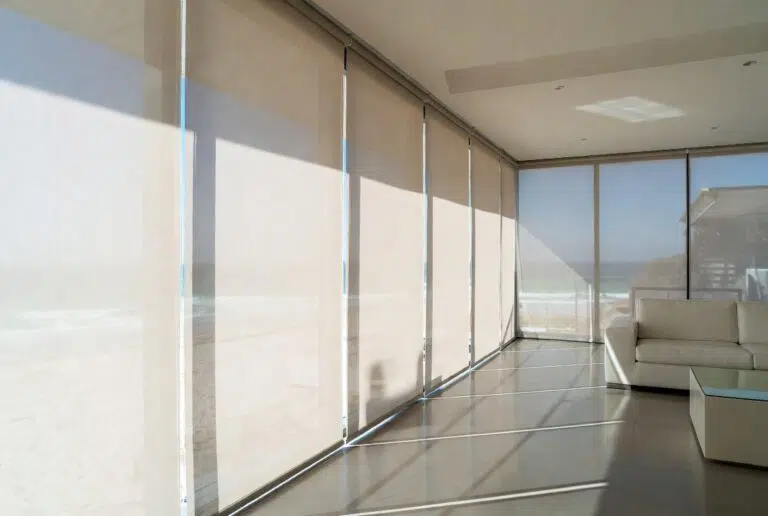
Open-plan homes with large glass expanses are standard in modern South African architecture, from Sandton apartments to Ballito beachfront to Stellenbosch wine estates to Pretoria East lifestyle estates. Sunscreen roller blinds are the stronger choice here because they manage glare and UV across wide spans while preserving the view line that the architecture was designed around.
Honeycomb blinds in translucent or sheer opacity also work beautifully on large windows, but the pleated fabric softens and diffuses the view rather than maintaining it. In a living room with floor-to-ceiling glass overlooking a garden or coastline, most homeowners prefer the transparency of a sunscreen roller during the day. At night or in winter, honeycomb provides superior insulation. The ideal setup for a large open-plan space with premium glass is a double roller system: sunscreen for daytime, blockout for night. If thermal performance is the priority, honeycomb translucent handles both jobs in a single blind, trading the crisp roller aesthetic for a softer, warmer look.
For sliding doors and stacking doors wider than 3 metres, roller blinds are the more practical mechanism. They span large widths cleanly and retract to a compact headrail. Honeycomb blinds stack at the top when raised, which can obscure the top 10 to 15 cm of the opening on very wide spans. Custom Blinds advises on the best system during the quoting process based on your exact window dimensions.
Can you use both honeycomb and roller blinds in the same house?
This is the most common approach among Custom Blinds customers nationally. Honeycomb in the rooms where comfort, quiet, and insulation matter. Roller in the rooms where moisture resistance, fabric variety, and budget matter. The two products complement each other rather than competing.
A typical whole-house specification might use honeycomb blockout in the main bedroom, honeycomb translucent in the living room and nursery, sunscreen rollers in the kitchen and open-plan areas, blockout rollers in guest bedrooms, and moisture-resistant rollers in bathrooms. For rental apartments where drilling is restricted, no-drill roller blinds handle the practical rooms while no-drill honeycomb covers the bedroom.
Custom Blinds offers both through the online shop with the same free nationwide delivery, 5-year warranty, and Custom Fit Guarantee (too big means a free trim; too small means 5% off the replacement). Manufacture takes 7 working days, shipping 3 to 4 days to Johannesburg, Cape Town, Durban, Pretoria, and other major metros. Garden Route customers can also see both products during a home consultation.
What brands of honeycomb and roller blinds does Custom Blinds supply?
Custom Blinds supplies honeycomb blinds from Luxaflex (the Duette range by Hunter Douglas) and Coulisse (the Palma range). Both are premium manufacturers with fabrics tested for South African UV intensity and temperature extremes. Duette is the original double-cell honeycomb and remains the highest-performing cellular blind available. Coulisse Palma offers a competitive alternative with excellent fabric quality.
Roller blinds are supplied from Somfy, Hunter Douglas, and Coulisse. The fabric range covers sunscreen, light-filtering, blockout, and printed options in hundreds of colours. All roller mechanisms are rated for daily use and available in chain, spring-assist, or Somfy motorised configurations. Custom Blinds does not manufacture roller blinds. They are supplied from these global manufacturers and made to your exact measurements, then delivered free to your door anywhere in South Africa.
Frequently Asked Questions
Are honeycomb blinds worth the extra cost over roller blinds in South Africa?
For bedrooms, living areas, and nurseries, yes. The insulation reduces energy costs every day and creates a quieter, more comfortable environment. The premium over roller blinds typically pays for itself within two to three winters through reduced heating costs. For kitchens and bathrooms, roller blinds are the more practical choice.
Can I buy honeycomb and roller blinds online in South Africa?
Yes. Custom Blinds sells both types through shop.customblinds.co.za with made-to-measure sizing, instant pricing, and free delivery to Johannesburg, Cape Town, Durban, Pretoria, Port Elizabeth, Bloemfontein and nationwide. Manufacture takes 7 working days. Shipping to Johannesburg, Cape Town, Durban, Pretoria, and other major metros takes 3 to 4 days after that.
Which blind is better for a nursery: honeycomb or roller?
Honeycomb blockout in a cordless configuration is the recommended nursery blind. It blocks light more completely than a roller, insulates the room for comfortable sleep temperature, reduces outside noise, and has no chain or cord mechanism. Over 70% of nursery blind orders through the Custom Blinds shop are honeycomb.
Do honeycomb blinds work in humid rooms like bathrooms?
Honeycomb blinds are not recommended for bathrooms or other high-humidity areas. Moisture can get trapped inside the cellular pockets and cause mould or fabric damage over time. For bathrooms and kitchens, use moisture-resistant roller blinds in PVC-coated or vinyl fabric, or aluminium venetian blinds.
Can honeycomb blinds be motorised?
Yes. Both the Luxaflex Duette and Coulisse Palma ranges are available with Somfy motorisation. This allows remote, app, or voice control through Google Home or Alexa. Motorised honeycomb blinds are popular in living rooms with high or hard-to-reach windows and in smart home setups across South Africa.
How much can honeycomb blinds reduce my electricity bill?
Honeycomb blinds reduce heat transfer through windows by up to 40% in winter and 60% in summer. The exact saving depends on window size, orientation, and how many hours per day the blinds are closed. Bedrooms and north-facing living rooms see the biggest benefit. The savings compound year-round with no running cost or maintenance required.
What is the price difference between honeycomb and roller blinds in South Africa?
Roller blinds start from approximately R180 per square metre for basic blockout fabric. Honeycomb blinds start from approximately R450 per square metre. The gap narrows at higher specifications: a motorised blockout roller and a standard cordless honeycomb can be similar in price. Custom Blinds provides instant pricing through the online shop for both types.
Ready to choose?
See both honeycomb and roller blinds with instant pricing on the online shop. Free delivery to Johannesburg, Cape Town, Durban, Pretoria, and everywhere in between.
Last reviewed: March 2026
All blinds are custom manufactured and quoted individually. Prices are indicative and subject to measurement and specification.
Related: Best blinds for estate and apartment living: honeycomb for heat, sunscreen for privacy, no-drill for rentals. The complete guide.
Related
New to honeycomb? Start with what are honeycomb blinds. For 2026 pricing, see the honeycomb pricing guide. Browse the full indoor blinds range. Configure and price your honeycomb blind online.
Types of Blinds in South Africa
How to Clean Every Type of Blind
Blockout Roller Blinds Guide
Custom Blinds Shutters & Awnings — South Africa’s trusted window covering specialists since 2010.