
Roller Blinds. Light Control, Privacy, and Clean Lines for Every Room.
One fabric panel. One compact cassette. Precise control over light and privacy that suits the way you live. Blockout for complete darkness. Translucent for softened daylight without losing privacy. Sheer for the view. Available online from Custom Blinds Shutters & Awnings with free shipping nationwide, or through our Garden Route showroom with expert advice and professional installation.
What are roller blinds and where can I buy them online in South Africa?
- Roller blinds are single-panel fabric blinds that roll into a compact aluminium cassette, giving clean lines and precise light control. Available in blockout (100% darkness), translucent (privacy with softened light), and sheer (filtered daylight with outward views).
- Custom Blinds® supplies made-to-measure roller blinds from R737 in UV-resistant, fade-proof fabrics engineered for South African coastal and inland conditions. Free delivery from Custom Blinds South Africa to every address in the country.
- Also available in no-drill mounting for renters, tiled surrounds, and aluminium frames that cannot be drilled.
- Custom Fit Guarantee on every order: too big, we trim for free. Too small, 5% off the replacement.
Shop blockout rollers · Shop sheer rollers · WhatsApp our team
Morning light lands exactly where you want it. The bedroom stays dark until you decide otherwise. The living room glows without glare. Roller blinds are the simplest way to shape how every room in your home feels, from the first light of a Johannesburg sunrise to a long Cape Town summer evening.
“Roller blinds are the most versatile window covering we supply. They work in every room, every climate, every budget. A well-chosen fabric and a precise fit make more difference to daily comfort than people expect.”
Duncan KaneFounder, Custom Blinds Shutters & Awnings — 18 years experience across South Africa
Why are roller blinds South Africa’s most popular window covering?
Roller blinds account for roughly 60% of all blind sales in South Africa, according to industry estimates. The reason is simplicity. One fabric panel wraps around a compact aluminium cassette. Pull it down for privacy and light control. Roll it up and the window is completely clear. No slats to dust, no cords to tangle, no bulk at the top of the frame.
That simplicity suits the way South Africans live. Large sliding doors in Durban need a clean covering that does not obstruct the opening. A Sandton bedroom needs complete darkness against early summer light. A Cape Town apartment kitchen needs something wipeable that handles steam. A Pretoria home office needs glare reduction without losing brightness. Roller blinds handle all of these with nothing more than the right fabric choice.
Custom Blinds South Africa supplies roller blinds in premium, internationally sourced fabrics that resist UV degradation, humidity, and salt air. Every blind is made to your exact window measurements, not cut down from a standard size. The difference shows in the fit: minimal side gaps, clean operation, and fabric tension that sits perfectly flat across the window.
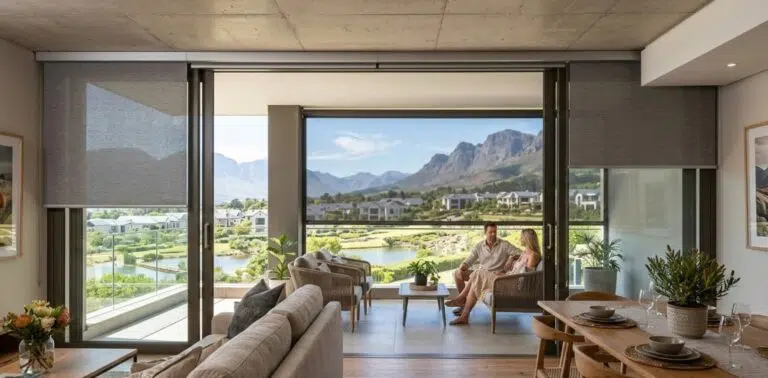
Which roller blind fabric suits your room?
The fabric defines what a roller blind does. Custom Blinds® offers three categories, each engineered for a different balance of light, privacy, and heat control.
Blockout, translucent, and sheer roller blinds compared
| Feature | Blockout | Translucent | Sheer |
|---|---|---|---|
| Light control | 100% light block when lowered | Diffuses and softens light, no direct view through | Gently filters light, preserves outward view |
| Privacy (day) | Complete | Complete | Good — shapes not visible from outside |
| Privacy (night, lights on) | Complete | High — silhouettes faintly visible | Low — interior visible |
| Best rooms | Bedrooms, nurseries, media rooms, shift workers | Living rooms, kitchens, bathrooms, home offices | Rooms with a view, garden-facing windows, open-plan living |
| Heat reduction | Reduces solar heat gain by up to 40% | Moderate, depends on fabric colour | Minimal, maximum airiness |
| UV protection | 100% | 85%+ | 60%+ |
| Maintenance | Wipe with damp cloth | Wipe with damp cloth | Wipe or vacuum on low setting |
Blockout fabric uses multiple bonded layers with a dense inner core that absorbs or reflects light completely. When properly fitted with minimal side gaps, a blockout roller blind creates near-total darkness at any hour. Bedrooms, nurseries, and media rooms benefit most. South Africa has among the highest UV levels in the world and summer dawns arrive before 5 am across most of the country. Blockout roller blinds address light, heat, and cold in a single product. Read the full guide: blockout roller blinds South Africa.
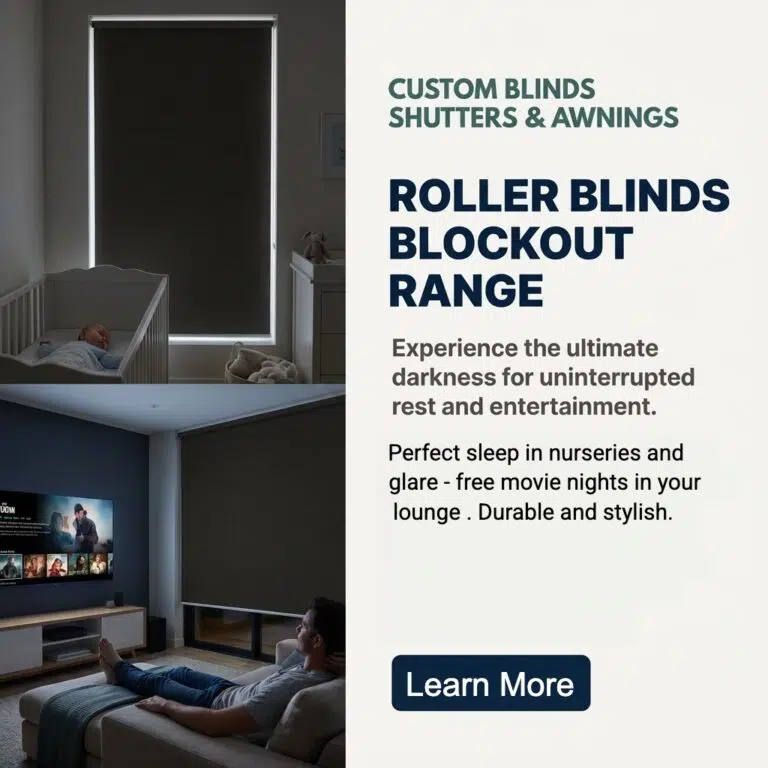
Translucent fabric sits between blockout and sheer. It softens and diffuses natural light without allowing a direct view through the material. During the day, the room stays bright and airy while shapes and movement outside remain obscured. This makes translucent rollers the most versatile option for living rooms, kitchens, bathrooms, and home offices where you want privacy without darkness. Translucent roller blinds offer more privacy and light protection than sheer, making them a practical middle ground for most rooms in the house.
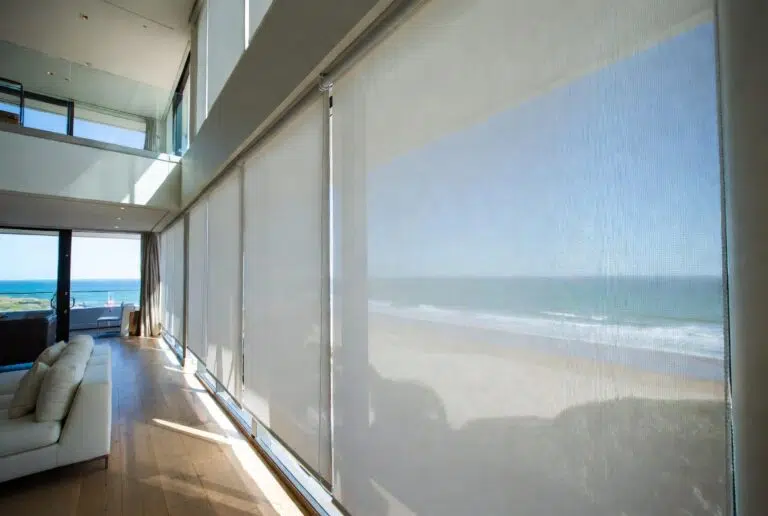
Sheer fabric filters light gently and preserves the view. You can see the garden, the street, the mountain, but the glare and UV are reduced. During daylight hours, passers-by see less in than you see out. Sheer rollers suit rooms where the view is as important as the interior. One thing to know: at night with interior lights on, sheer fabric becomes more transparent. If night-time privacy matters, pair sheer rollers with curtains or consider zebra blinds which combine sheer and opaque bands in a single blind.
Can I get roller blinds that fit without drilling?
Yes. Custom Blinds® offers no-drill roller blinds that use spring-tension brackets to grip inside the window recess without screws, adhesive, or any wall damage. No-drill mounting is available on both blockout and sheer roller blinds ordered through the online shop.
South Africa has over 2.2 million rental households according to StatsSA, and the majority of lease agreements prohibit drilling into window frames or walls. No-drill roller blinds solve this cleanly. But renters are not the only buyers. Homeowners with tiled window surrounds, aluminium frames that crack when drilled, or heritage buildings where alterations are restricted all benefit from the same mechanism. Over 40% of online blind orders placed through Custom Blinds® in the past twelve months have been no-drill, making it the single most requested mounting option in the shop.
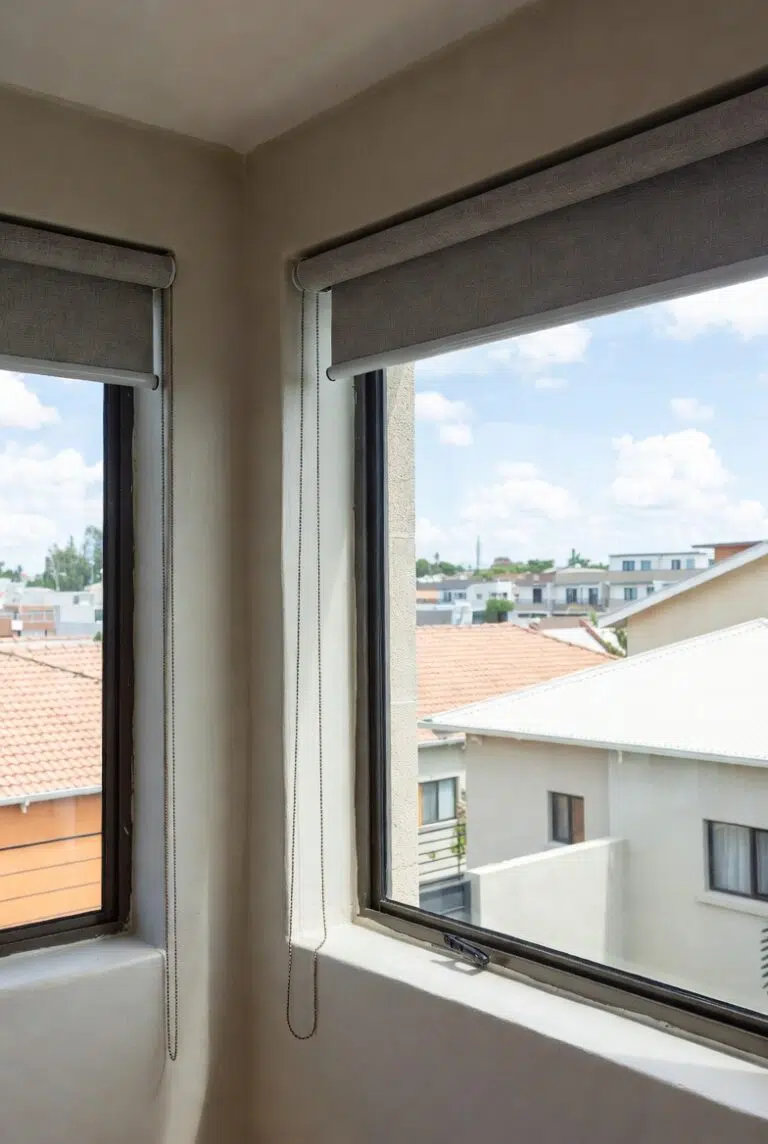
The fabric, hardware, and operation are identical to conventionally mounted roller blinds. The only difference is how the headrail attaches to the window. You are not compromising on quality, light control, or lifespan by choosing no-drill. For a deeper look at all no-drill blind types, including honeycomb and zebra options, read the full no-drill blinds guide.
How do you measure and order roller blinds online?
Accurate measurement is the difference between a blind that fits perfectly and one that lets light leak around the edges. Over 95% of our online customers measure successfully on their first attempt using the guide below. The process takes under two minutes per window.
For a recess fit (the blind sits inside the window frame): measure the width at the top, middle, and bottom of the opening. Use the narrowest measurement. Measure the drop on the left, centre, and right side. Use the longest measurement. Record in millimetres. We deduct 10mm from each side to ensure smooth operation within the frame.
For a face fit (the blind sits on the wall above the frame): measure the total width you want covered, adding at least 50mm on each side to minimise light gaps. Measure the drop from where you want the headrail to the point where you want the blind to finish.
Enter your measurements into the Blind Builder, choose your fabric and colour, and the price updates instantly. No waiting for quotes. No home visits unless you want one. Checkout, and your made-to-measure roller blind ships free to anywhere in South Africa.
Where does Custom Blinds® deliver roller blinds in South Africa?
Every roller blind ordered through shop.customblinds.co.za ships free to any address in South Africa. Johannesburg, Cape Town, Durban, Pretoria, Port Elizabeth, Bloemfontein, East London, Polokwane, Nelspruit, Kimberley, and every town in between. Manufacturing takes 7 to 10 working days and delivery follows within 3 to 5 working days depending on your region.
Garden Route residents in Knysna, George, Plettenberg Bay, Mossel Bay, Sedgefield, and Wilderness have the option of a free in-home consultation with our installation team. We measure, advise on fabric and mounting, and install professionally. Call Duncan on 079 523 5407 to book.
For everyone else, the online process is designed to be self-sufficient. The Blind Builder handles measuring guidance, fabric selection, instant pricing, and checkout. If you have a question at any point, WhatsApp our team on 076 022 8410 and a real person will reply.
How do roller blinds compare to other blind types?
Roller blinds suit most rooms, but they are not the only option. The right choice depends on what each room needs most.
Honeycomb blinds provide better insulation. Their cellular structure traps air, reducing heat transfer through the glass more effectively than any flat fabric. For bedrooms where temperature control and noise reduction matter as much as darkness, honeycomb blinds outperform roller blinds on thermal efficiency. See our honeycomb vs roller comparison.
Zebra blinds (also called double roller blinds) combine sheer and opaque fabric bands on a single roller. This gives you variable light control that standard roller blinds cannot match. Align the sheer bands for filtered daylight. Shift to opaque for 95 to 99% light block. Zebra blinds cost more than single-fabric rollers but offer flexibility that many living rooms and offices benefit from.
Plaswood venetian blinds are the moisture-proof alternative to real wood, built for bathrooms, kitchens, and coastal homes where humidity would warp timber slats.
If your windows open onto a patio, veranda, or braai area, consider pairing indoor roller blinds with outdoor blinds. An exterior blind blocks solar heat before it reaches the glass, which is more effective than any interior covering alone. Clear PVC, screen mesh, and canvas options are all available for online ordering or Garden Route installation.
For a complete overview of all blind types available in South Africa, including venetian, bamboo, and vertical options, read our guide to blinds in South Africa.
Frequently asked questions about roller blinds in South Africa
How much do roller blinds cost in South Africa?
Custom Blinds® made-to-measure roller blinds start from R737 for a standard window. Price depends on window size and fabric type (blockout, translucent, or sheer). No-drill mounting is available at additional cost. Enter your measurements into the Blind Builder for an instant price with no obligation.
Can I fit roller blinds without drilling into the wall?
Yes. No-drill roller blinds use spring-tension brackets that clip inside the window recess without screws, adhesive, or wall damage. They suit rental properties, tiled surrounds, and aluminium frames that cannot be drilled. The no-drill bracket is an add-on to any roller blind order. Read the full no-drill blinds guide.
What is the difference between blockout and translucent roller blinds?
Blockout fabric blocks 100% of light and provides complete privacy around the clock. Translucent fabric softens and diffuses light without allowing a direct view through. Rooms stay bright but private. Blockout suits bedrooms and media rooms. Translucent suits kitchens, living rooms, and offices. For a detailed comparison, read sheer or blockout roller blinds.
Do you deliver roller blinds to Johannesburg, Cape Town, and Durban?
Custom Blinds Shutters & Awnings delivers free to every address in South Africa, including Johannesburg, Cape Town, Durban, Pretoria, Port Elizabeth, Bloemfontein, and all areas in between. Manufacturing takes 7 to 10 working days. Delivery follows within 3 to 5 working days depending on location.
How do I clean roller blinds?
Wipe the fabric with a soft damp cloth for routine cleaning. For dust buildup, use a vacuum cleaner on a low setting with a brush attachment. Avoid harsh chemicals. Blockout and translucent fabrics are particularly low-maintenance. For a full step-by-step guide, read how to clean blinds in South Africa.
Can roller blinds be motorised?
Yes. Eve MotionBlinds and other motorisation systems can be added to roller blinds for remote, app, or voice control. Motorised rollers suit hard-to-reach windows, smart home setups, and anyone who wants to schedule light and privacy automatically. Contact our team for a motorisation quote.. For Apple HomeKit integration, see MotionBlinds
What quality are Custom Blinds® roller blind fabrics?
All roller blind fabrics are sourced from international manufacturers and tested for UV resistance, colour fastness, and dimensional stability. Blockout fabrics use multi-layered bonded construction for complete light block. Translucent and sheer fabrics are engineered to resist fading, humidity, and salt air, making them suitable for both coastal and inland South African conditions.
What guarantee do Custom Blinds® roller blinds carry?
Every online order is covered by the Custom Fit Guarantee. If the blind arrives too big, we trim it at no charge. If it arrives too small, you receive 5% off a replacement blind. This applies to all roller blind orders placed through shop.customblinds.co.za.
Roller blinds, made for your windows.
Made to measure. Delivered free across South Africa. Custom Fit Guarantee on every order.
Custom Blinds® is a registered South African window covering specialist established in 2010, serving the Garden Route from Knysna and delivering nationally via shop.customblinds.co.za. We supply roller blinds, honeycomb blinds, venetian blinds, zebra blinds, and no-drill blinds from Somfy, Hunter Douglas, and Coulisse. We manufacture Custom Lifestyle Shutters™ and Custom Lifestyle Awnings™ locally. Our Custom Fit Guarantee covers every online order.