
What Are Honeycomb Blinds? The Complete South African Guide
Some rooms just never feel right. Too hot at noon. Too cold by evening. Light that glares instead of glows. Honeycomb blinds fix the temperature, the glare and the noise in one quiet layer of engineered fabric.
What are honeycomb blinds and how do they work?
- Honeycomb blinds (also called cellular blinds or Duette-style blinds) are window coverings made from pleated fabric bonded into rows of hollow cells that trap still air
- The trapped air creates a natural insulating barrier between the glass and the room, reducing heat transfer by up to 35 percent
- Available in single-cell construction for South African conditions, in light-filtering or full blockout opacities
- Operate via cord, cordless lift or motorised systems, cordless options are recommended for child safety
- Fold into a compact stack at the top of the window, preserving the view when fully raised
- Custom Blinds supplies Duette-style honeycomb ranges from leading manufacturers, engineered for South African UV, heat and coastal conditions
- Available to order online to Johannesburg, Cape Town, Durban, Pretoria, Port Elizabeth, Bloemfontein and across South Africa with professional installation along the Garden Route
Need expert advice? Call Duncan on 079 523 5407
TLDR
Honeycomb blinds use hollow fabric cells to trap air, creating a thermal and acoustic barrier at your window. They reduce heat gain by up to 35%, dampen outside noise and fold neatly out of sight. Custom Blinds supplies single-cell honeycomb blinds in blockout and light-filtering options, order online or book a Garden Route consultation.
Designed Comfort
You close the blind. The room goes quiet. The glare softens. The temperature settles. That is what honeycomb blinds do, they make a room feel the way it should have felt all along.
Cooler Afternoons
Cells trap hot air before it reaches the room. No more choosing between light and heat.
Warmer Mornings
The same cells hold warmth inside during winter. One blind works both seasons.
Softer Light
Light-filtering fabrics diffuse harsh sun into a gentle, even glow. No hot spots. No dark corners.
Quieter Rooms
The cellular structure absorbs sound. Road noise, wind, barking dogs, all reduced.
“People always ask which blind keeps the heat out best. Honeycomb wins every time. The air pocket does what no flat fabric can, it actually insulates, like a wall does. That is why I recommend them for north-facing windows and any room that overheats.”
Duncan, Custom Blinds, 20 years experience across the Garden Route
How It Works
How does the honeycomb cellular structure work?
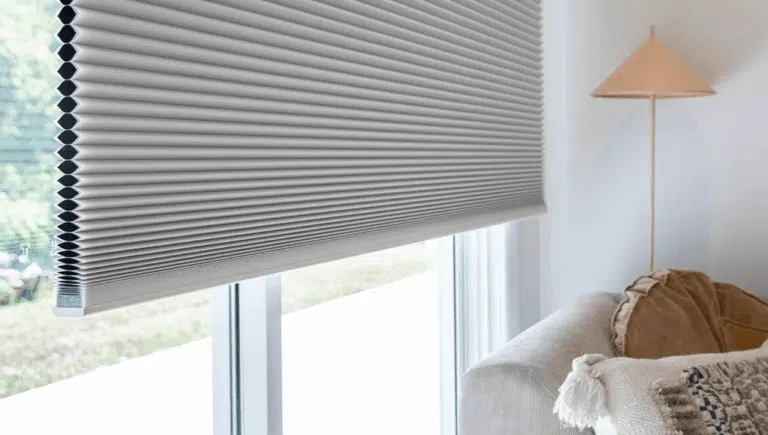
Honeycomb blinds are built from two layers of polyester fabric bonded at the pleats to form rows of hollow cells. When you look at the blind from the side, you see the distinctive honeycomb profile that gives these blinds their name.
Each cell traps a pocket of still air. Still air is one of the most effective insulators known, it resists heat transfer far better than a single layer of fabric. That air pocket sits between the glass and your room, acting as a buffer against both heat gain in summer and heat loss in winter.
This is what separates honeycomb blinds from every other window covering. Roller blinds block light. Venetian blinds redirect it. Honeycomb blinds manage the temperature, the light and the sound, all from one clean, minimal fabric layer.
Single-Cell vs Double-Cell
Overseas markets often sell double-cell and triple-cell honeycomb blinds for extreme cold. In South Africa, single-cell construction is the practical choice. Double-cell blinds are heavier, can sag on wide windows, and the extra insulation is overkill for local conditions. Single-cell fabrics balance insulation with weight, hang neatly and operate smoothly over time.
Custom Blinds focuses exclusively on single-cell honeycomb blinds for this reason. They deliver the insulation South African homes need without the drawbacks.
How do honeycomb blinds compare to other window coverings?
Every blind type has its place. Here is how honeycomb blinds compare to the alternatives most South African homeowners consider.
| Feature | Honeycomb | Roller | Venetian | Shutters |
|---|---|---|---|---|
| Thermal insulation | ✓ Excellent, air pocket barrier | Basic, single fabric layer | Moderate, slat angle helps | Good, solid louvre panel |
| Sound absorption | ✓ Yes, cellular structure dampens noise | ✗ Minimal | ✗ Minimal | Moderate when closed |
| Light control range | Sheer, light-filter, blockout | Sheer, light-filter, blockout | ✓ Full range via tilt angle | ✓ Full range via louvre angle |
| Stack size when open | ✓ Very compact, minimal stack | Compact roll at top | Moderate, slats stack | ✗ Fixed panels, always visible |
| UV protection | ✓ Up to 99% UV blocked | Good, depends on fabric | Good, depends on slat angle | ✓ Excellent when closed |
| Child safety | ✓ Cordless and motorised options | Chain or motorised | Cord or wand tilt | ✓ No cords |
| Moisture suitability | ✗ Not for bathrooms or wet areas | Some moisture-rated fabrics | ✓ Aluminium resists moisture | ✓ PVC handles moisture well |
| Price range (per window) | R4,500 – R10,000+ | R800 – R4,000 | R1,200 – R5,000 | R6,000 – R18,000+ |
For a detailed side-by-side between shutters and all blind types, see our shutters vs blinds comparison. If you are deciding between roller and honeycomb specifically, our honeycomb blinds buyer’s guide walks through every decision point.
Which rooms suit honeycomb blinds best in South African homes?
Not every window needs the same treatment. Honeycomb blinds are the strongest choice for specific situations.
North-facing windows
These take the worst of the afternoon sun. The cellular barrier keeps rooms usable without blocking the view entirely. Light-filtering honeycomb fabrics reduce heat gain while maintaining natural daylight, something a blockout roller cannot do.
Bedrooms and nurseries
Blockout honeycomb blinds darken a room completely. The sound-absorbing cells make bedrooms noticeably quieter, useful in suburbs near main roads or in coastal homes exposed to wind noise. Cordless lift systems remove the risk of dangling cords in children’s rooms.
Living areas with large glazing
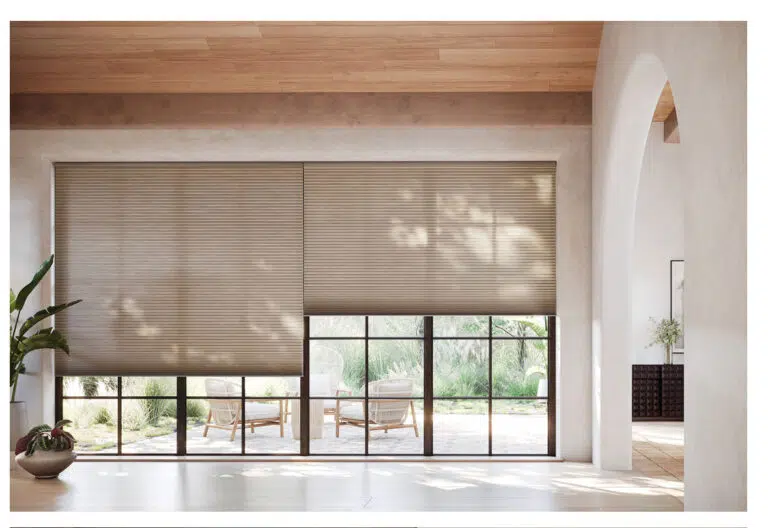
Modern South African homes favour wide windows and sliding doors. Honeycomb blinds fold into a tight stack at the top, so when they are raised your view is unobstructed. No bulky slats, no hanging panels.
Home offices
Glare on a laptop screen is the fastest way to ruin a working day. Light-filtering honeycomb fabric softens harsh light while keeping the room bright enough to work without overhead lights. For more office-specific advice, see our home office blinds guide.
Where honeycomb blinds are not recommended
Bathrooms, kitchens and any space with high humidity or direct water splash. The pleated fabric can trap moisture and is difficult to dry. For wet areas, aluminium venetian blinds or PVC shutters handle moisture far better.
How do you choose the right opacity for honeycomb blinds?
Honeycomb blinds come in two main fabric types. The right choice depends on what the room needs most.
Light Filtering
- Softens harsh sunlight into an even, diffused glow
- Maintains daytime privacy, people outside see fabric, not details
- Keeps the room bright enough to work or read without overhead lights
- Ideal for living rooms, kitchens, studies and home offices
- Does not provide full darkness, not suited as sole bedroom covering
Blockout
- Blocks 100% of light when fully closed with a tight fit
- Maximum thermal insulation, the densest fabric traps the most heat
- Complete privacy at all hours
- Ideal for bedrooms, nurseries, media rooms and shift workers
- Available as duotone, colour inside, white outside for a uniform street view
Not sure which opacity suits your windows? Our opacity guide covers the full range, including sheer options that are not available in honeycomb but are offered across our indoor blinds range.
Honeycomb blinds can reduce household heating and cooling costs by up to 35%. For a detailed breakdown of how much you can save per window, see our honeycomb energy-saving guide.
Can honeycomb blinds be motorised?
Honeycomb blinds can be operated manually or with smart automation. Here is what Custom Blinds supplies.
Corded lift
A thin cord along one side raises and lowers the blind. Simple and reliable. Not recommended for homes with young children, cord loops are a strangulation hazard.
Cordless lift
The blind raises and lowers with a gentle push or pull on the bottom rail. No cords, no chains, no hazards. This is our default recommendation for bedrooms, nurseries and family homes.
Motorised
Battery-powered or hardwired motors controlled by remote, app or voice assistant. Ideal for hard-to-reach windows, skylights and large glazing runs. Custom Blinds works with Somfy and MotionBlinds systems for reliable, quiet operation.
For a full comparison of motorisation options across all blind types, see our motorised blinds guide.
Why Custom Blinds
Are honeycomb blinds built for South African conditions?
Chain retailers sell honeycomb blinds designed for European winters. Those fabrics and mechanisms are not always suited to South African UV exposure, temperature swings or coastal conditions. Custom Blinds sources Duette-style honeycomb ranges from established manufacturers with fabrics engineered for local light, heat and humidity levels.
Installations Since 2010
Blinds, shutters and awnings fitted across the Garden Route and shipped nationwide
Years on the Garden Route
Duncan has measured, installed and maintained window coverings in Knysna, George and Plettenberg Bay since 2010
Company, Full Service
The only SA company offering online ordering, in-home consultation, in-house manufacturing and professional installation under one roof
Value
How much do honeycomb blinds cost in South Africa?
Honeycomb blinds sit between quality roller blinds and shutters in price. The exact cost depends on window size, fabric choice and operating system.
A standard bedroom window (1200 × 1500 mm) in blockout honeycomb typically costs around R4,800. Larger windows and motorised options increase the price. For a detailed price breakdown by size and fabric, see our honeycomb energy and pricing guide.
The important number is the long-term return. Honeycomb blinds reduce heating and cooling electricity costs enough to pay for themselves within roughly 18 months in most South African homes. For a comprehensive pricing comparison across all blind types, our blinds cost guide covers every category.
35% Energy Saving
Reduced heat transfer cuts aircon and heater usage
Noise Reduction
Cellular fabric absorbs up to 60% of external sound
99% UV Block
Protects furniture, flooring and fabrics from sun damage
18-Month Payback
Energy savings offset the investment in under two years
“I have fitted honeycomb blinds in homes from Wilderness to Plett. The ones that work best are always the ones measured properly and fitted snug to the frame. A loose fit loses half the insulation. That is why we measure on site for Garden Route clients.”
Duncan, Custom Blinds, on-site consultation across the Garden Route
Frequently Asked Questions
What are honeycomb blinds made of?
Honeycomb blinds are made from non-woven polyester fabric bonded at the pleats to create hollow cells. The cellular structure traps air for insulation. Custom Blinds supplies fabrics from established manufacturers with UV-stabilised and fade-resistant finishes suited to South African conditions.
Are honeycomb blinds good for South African heat?
Yes. The air pocket trapped inside each cell acts as an insulating barrier that reduces heat gain by up to 35 percent. This makes honeycomb blinds one of the most effective window coverings for managing heat in South African homes, particularly on north-facing windows.
How much do honeycomb blinds cost in South Africa?
Honeycomb blinds typically cost between R4,500 and R10,000 per window depending on size, fabric and operating system. Order honeycomb blinds online at Custom Blinds for accurate, size-based pricing with delivery across South Africa.
Can honeycomb blinds be used in bathrooms?
Honeycomb blinds are not recommended for bathrooms or high-humidity areas. The pleated fabric can trap moisture and is difficult to dry, which may lead to mould. For wet areas, aluminium venetian blinds or PVC shutters are better suited.
Are honeycomb blinds safe for nurseries and children’s rooms?
Cordless honeycomb blinds are one of the safest window coverings for children’s rooms. There are no dangling cords or chain loops. Blockout versions also darken the room completely, which helps with daytime naps and early bedtimes.
Do honeycomb blinds block noise?
The cellular structure absorbs sound more effectively than flat-fabric blinds. Honeycomb blinds can reduce external noise by up to 60 percent, making them a practical choice for bedrooms facing busy roads or homes in windy coastal areas on the Garden Route.
Can I order honeycomb blinds online in South Africa?
Yes. Custom Blinds delivers honeycomb blinds anywhere in South Africa via the online shop. Enter your measurements, choose your fabric and opacity, and receive custom-made blinds delivered to your door. Garden Route customers also have the option of on-site measurement and professional installation.
What is the difference between honeycomb blinds and Duette blinds?
Duette is a brand name (owned by Hunter Douglas / Luxaflex) for their specific range of honeycomb blinds. The term is often used generically to describe any cellular blind with a similar construction. Custom Blinds supplies Duette-style honeycomb ranges from multiple quality manufacturers.
Related guides:
Honeycomb vs roller blinds: which one for your home?
How much energy do honeycomb blinds actually save?
Every type of blind in South Africa compared
How to clean honeycomb blinds
Ready to Try Honeycomb Blinds?
Order online for delivery across South Africa, or book a free consultation for homes along the Garden Route.
Information reflects products available at time of publishing. Pricing is indicative, use our online shop for exact, size-based quotes. Custom Blinds Shutters & Awnings® | Knysna, Garden Route | customblinds.co.za
Related Pages
Related
Compare directly: honeycomb vs roller blinds. For 2026 pricing, see the honeycomb pricing guide. Browse our full indoor blinds range.
Custom Blinds Shutters & Awnings — South Africa’s trusted window covering specialists since 2010.